
We’ve all been there—standing in the middle of a new studio apartment with a tape measure in one hand and a sinking feeling in our chest. You want a home that looks like a curated gallery, but the reality of a 400-square-foot floor plan usually leads to a “clutter-core” nightmare. The truth is, a small apartment furniture layout isn’t about how much you can cram in; it’s about how much “white space” you can leave for your life to happen.
At Grainv, we’ve spent years analyzing spatial flow. We’ve found that by swapping traditional, bulky pieces for smart, space-saving furniture, you can actually trick the eye into seeing more room than the blueprint suggests. Here are seven designer-approved layouts to transform your cramped quarters into a sanctuary.
1. The “Zone-Defining” Studio Blueprint
In a studio, the biggest “vibe killer” is seeing your unmade bed while you’re trying to host a dinner party. To fix this, you need to create “rooms without walls.”
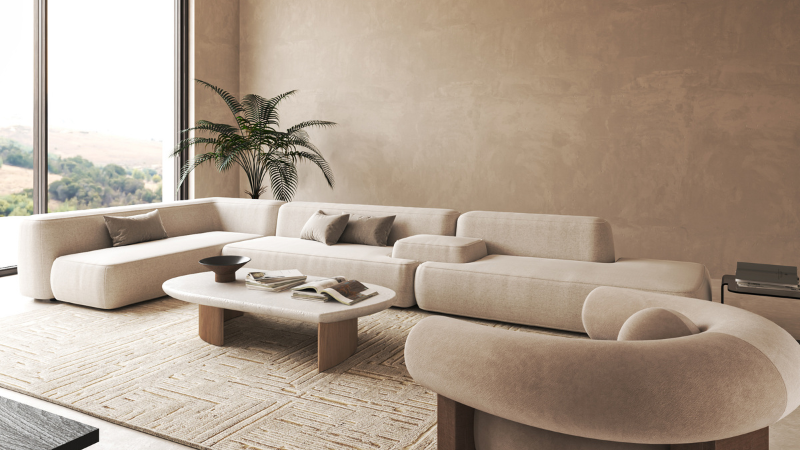
Don’t reach for a heavy room divider—it kills the light. Instead, use a modular sofa positioned with its back to the sleeping area. This creates a psychological boundary. When you’re on the sofa, your back is to the “bedroom,” making the living area feel like a completely separate suite.
2. Master the “Vertical Horizon” Strategy
When floor space is at a premium, look up. Most people leave the top 30% of their walls completely empty, which is a massive waste of real estate.
Professional layouts utilize vertical storage that reaches toward the ceiling. By using tall, narrow shelving units, you draw the eye upward, making the ceilings feel higher. Pro tip: Keep the bottom shelves for daily items and the top for “archive” storage in matching aesthetic bins to reduce visual noise.
3. The Hybrid Work-Life Hub
The “work from home” era has turned many dining tables into permanent office desks. It’s cluttered and exhausting.
The professional fix? The “Tucked-Away” office. Utilize a narrow console table behind your sofa or an empty closet converted into a “cloffice.” The goal is to ensure that when the laptop closes, the “office” disappears, preserving the relaxation intent of your living space.
4. The “Social Flow” Living Room
The biggest mistake in small apartment layouts? The giant, rectangular coffee table. It’s a literal roadblock.
To maximize your square footage, we recommend “Floating Layouts.” Swap the big coffee table for nesting tables or a modular ottoman. These can be tucked away when you need floor space for yoga or spread out when friends come over for drinks. For more inspiration on high-end minimalist design, check out Architectural Digest’s Guide to Small Spaces.
5. The “Visual Illusion” Corridor
If your entryway feels like a dark tunnel, use the “Mirror-and-Legs” trick. Choose furniture with high, tapered legs. Why? Because the more floor you can see under your furniture, the larger the room feels. Combine a leggy console table with a large-scale mirror to double the light and the perceived depth of the hallway.
6. The “Invisible Storage” Bedroom Layout
Your bed is likely the largest object in your home. If it’s just sitting there, it’s a wasted opportunity.
A high-conversion layout utilizes a lift-up storage bed. This provides the equivalent of a full dresser’s worth of storage without taking up an extra inch of floor space. Pair this with wall-mounted nightstands to keep the floor clear and easy to clean.
7. The Expandable Dining Solution
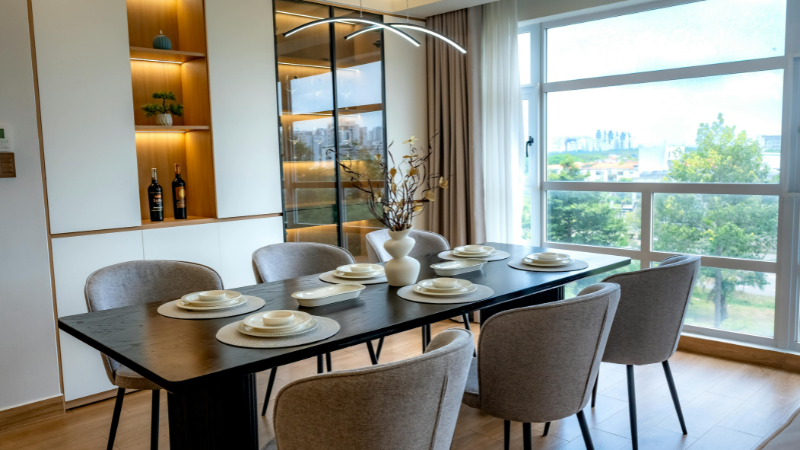
Unless you host six people for dinner every night, you don’t need a six-person table. A professional small apartment layout uses a “Gate-leg” or “Extending” table. Position it against a wall as a desk or a two-person breakfast nook, and pull it into the center of the room only when the occasion calls for it.
Data-Driven: The “30% Flow Rule”
Interior designers use a specific ratio to ensure a room doesn’t feel suffocating. Here is how you should balance your furniture footprint:
| Area Type | Furniture Coverage | Clear Walkway | Result |
| Cramped | 70% | 30% | Hard to navigate, visually heavy. |
| Optimal | 45% – 50% | 50% – 55% | Breathable, high-end feel. |
| Sparse | 20% | 80% | Feels cold and unfinished. |
FAQ: Frequently Asked Small Space Questions
Q: Will dark furniture make my small apartment look smaller? Not necessarily. While light colors reflect more light, a dark, moody “accent” piece—like a charcoal modular sofa—can actually add depth and make the walls feel like they are receding.
Q: What is the one piece of furniture I should never buy for a small apartment? Avoid “overstuffed” armchairs with bulky, skirted bases. They act like visual anchors that drag the room down. Always opt for pieces with clean lines and visible legs.
Why Grainv?
At Grainv, we don’t just sell furniture; we engineer spatial solutions. Our pieces are tested for “Living Clearance”—ensuring that every drawer opens fully and every sofa leaf fits through a standard city elevator. We believe that a small footprint should never mean a small life.