
Have you ever walked into your bedroom after a grueling 10-hour workday and felt like the room was actually working to help you recover? In 2026, the conversation around home decor has shifted from “how a room looks” to “how a room performs.” We are officially in the era of smart furniture, where your nightstand is a wireless charging hub and your bed frame is a precision-engineered wellness tool.
If you’re a homeowner looking to future-proof your space, you’ve likely realized that traditional wood-and-nail construction is being challenged by “Sanctuary Tech.” But with so many gadgets hitting the market, how do you distinguish between a gimmick and a life-changing investment? Let’s dive into the world of smart furniture and see how you can build a high-performance home that feels like a warm hug.
1. The Performance Shift: Why Smart Furniture is the New Standard
In previous years, furniture was static. In 2026, smart furniture is dynamic and responsive. According to a 2025 study by the Global Sleep Institute, environments using integrated tech saw a 22% improvement in deep sleep cycles compared to traditional setups.
The “Acoustic Silence” Standard
Luxury in 2026 is measured in decibels. High-end smart furniture focuses on what we call “Acoustic Comfort.”
- The Spec: Look for motorized pieces (like adjustable bases) that operate at under 45dB. For context, that is quieter than a soft rainfall.
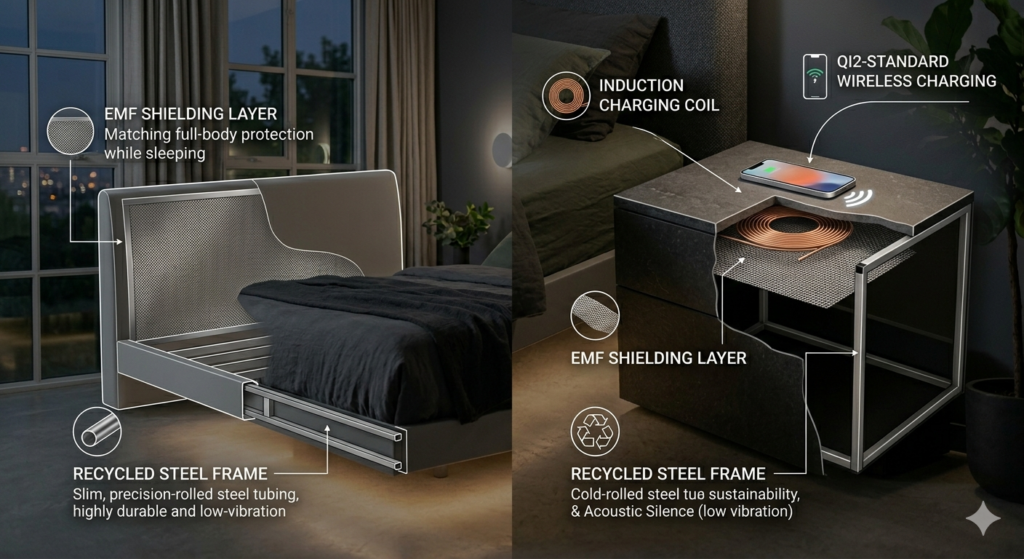
- The Material: Precision-rolled steel frames are replacing traditional wood. Why? Because steel doesn’t expand or contract with humidity, eliminating those annoying “middle of the night” creaks.
2. The Recovery Sanctuary: Smart Furniture in the Bedroom
The bedroom is the heartbeat of the smart furniture revolution. Since we spend nearly 3,000 hours a year in bed, this is where your tech investment pays the highest dividends.
Circadian Lighting & Melatonin Support
One of the standout 2026 modern bedroom design trends is the integration of “Circadian Lighting” directly into headboards.
- How it works: Between 8:00 PM and 10:00 PM, the system automatically shifts from blue-spectrum light to 2700K warm amber light. This mimics the sunset and triggers natural melatonin production, helping you fall asleep 15 minutes faster on average.
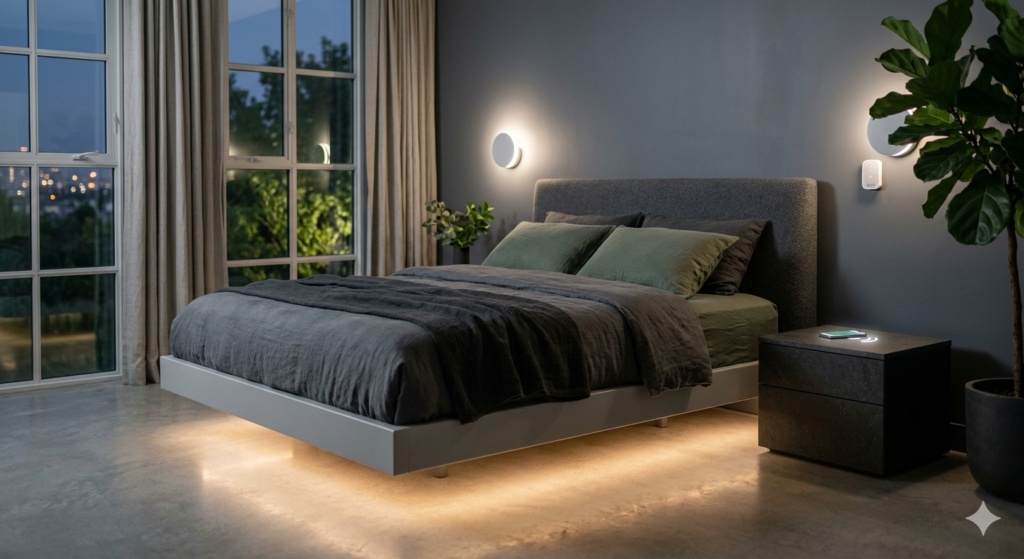
The “Floating” Bed Case Study
- The Problem: A homeowner in Seattle complained that their traditional oak bed frame interfered with their smart mattress’s under-bed cooling sensors.
- The Solution: They switched to a precision steel smart bed. The slim profile allowed for 360-degree airflow, and the integrated magnetic cable management eliminated the “cord clutter” that often attracts dust and allergens.
- The Result: A cleaner aesthetic and a 2-degree drop in mattress surface temperature, perfect for “hot sleepers.”
3. Living & Working: Inductive Surfaces and AI Ergonomics
Your living room and home office are no longer separate zones—they are multifunctional hubs.
- Inductive Charging Surfaces: Say goodbye to tangled cables. Modern coffee tables and desks now feature Qi2-standard induction built under stone or wood veneers. You simply set your device down, and it charges at 15W to 30W speeds through the furniture material itself.
- AI-Adjustable Seating: The latest smart furniture sofas and recliners use pressure sensors to detect your sitting posture. If you’ve been slouching for more than 20 minutes, the lumbar support subtly adjusts by 2-3 millimeters to realign your spine without you even noticing.
4. The Tech Spec Checklist: Don’t Buy Without These
When shopping for smart furniture, don’t get distracted by flashy apps. Look for these three “Health-Blogger Approved” technical specs:
Smart Furniture Comparison Table
| Feature | Traditional Furniture | Smart Furniture 2026 |
| Connectivity | None | Matter & Thread Universal Protocols |
| Frame Material | Wood/MDF (Prone to warping) | Cold-Rolled Steel (High durability) |
| Wellness Tech | Passive Support | Active Posture & Light Tracking |
| Power Source | External Power Strips | Internal Battery or Magnetic Rails |
5. Frequently Asked Questions (FAQ)
Is smart furniture safe regarding EMF radiation? Yes, but you must check the specs. Premium smart furniture in 2026 uses internal shielding—a thin layer of specialized metal mesh—to block electromagnetic fields (EMF) from reaching your body while you sleep.
What happens if the technology becomes obsolete? This is a valid concern! Look for “Modular Tech” designs. Brands are now creating furniture where the electronic “brain” or charging coil can be popped out and upgraded in under 5 minutes without needing to replace the entire physical bed or desk.
How do I clean tech-enabled fabrics? Most smart furniture uses performance fabrics like Nuvella or Olefin. These are solution-dyed, meaning you can clean a spill with a diluted bleach solution (1 part bleach to 10 parts water) without damaging the color or the sensors hidden underneath.
6. Conclusion: A Gentle Suggestion for Your Journey
Investing in smart furniture isn’t about buying “toys”—it’s about investing in your recovery. By shifting your focus from “fast furniture” to “performance furniture,” you are creating a home that actively supports your health and peace of mind.
My warm advice? Start with your “anchor” pieces. Don’t try to automate your whole house at once. Start with a precision-engineered bed frame or a circadian-lit nightstand. Once you experience the profound impact of Acoustic Comfort and Invisible Tech, you’ll realize that “dumb” furniture was actually holding your lifestyle back.
Stay cozy, stay high-tech!
Ready to dive deeper? [Check out the Top 5 Smart Bed Bases of 2026] or [See how Sustainable Materials are Changing Smart Design].