
Your bedroom should serve as a retreat, not a logistical hurdle. Yet, for many dwellers in high-density urban hubs, the bed often feels less like furniture and more like a spatial squatter—a massive footprint that dictates a cramped, utilitarian existence.
The secret to a high-end, functional bedroom isn’t necessarily downsizing your mattress; it’s choosing a frame that respects the laws of spatial geometry. When we evaluate beds for small rooms, our goal is to balance “visual volume” with daily usability.
The “Rule of 24”: Layout Logic and Spatial Flow
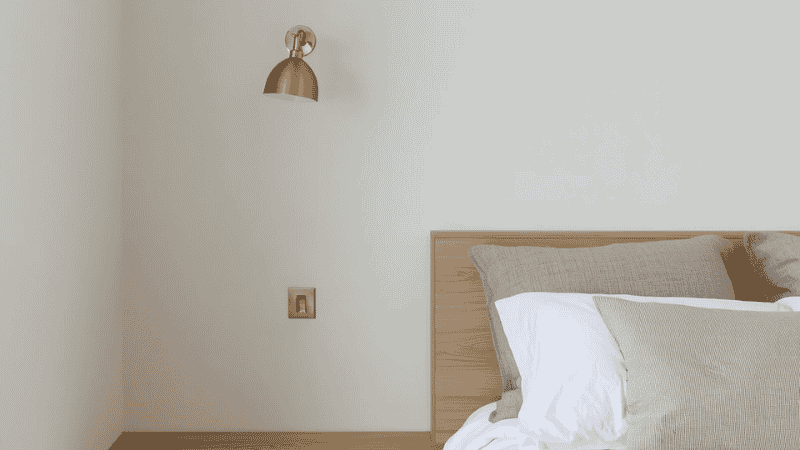
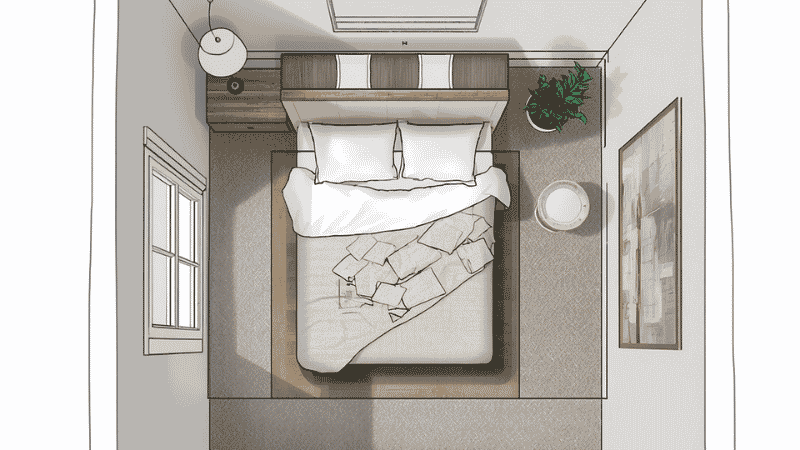
In design, we live by the “Rule of 24.” To maintain a premium experience and avoid the undignified “sideways shuffle,” you need a minimum of 24 inches of walking clearance on at least two sides of the bed.
If your floor plan is particularly tight, we often suggest sacrificing the symmetry of a second nightstand in favor of breathing room. If you are forced into a “corner placement,” the frame’s profile becomes your most important variable. Avoid wrap-around headboards or protruding “wing” details; these add 4–6 inches of unnecessary bulk that shrink your clearance paths.
What Most Interior Guides Get Wrong
Most generic listicles suggest that “smaller is better.” They advocate for Twin or Full beds regardless of the user’s lifestyle. In reality, a Queen bed can work in a tiny room if you optimize the Furniture Entity SEO—selecting pieces based on their architectural footprint rather than just their mattress size.
- The Drawer Fallacy: Guides often recommend storage beds with side drawers. In a room less than 10 feet wide, you cannot fully extend those drawers, making half your storage inaccessible.
- The “Push to the Wall” Myth: Many suggest pushing the bed against a window. This creates condensation issues and makes changing the sheets a physical chore. A 3-inch gap is the professional minimum.
- The Scale Misconception: Tiny furniture in a tiny room actually makes the room feel smaller. One “hero” bed frame paired with modern interior design techniques creates a more cohesive, expensive feel.
Visual Balance: Weight vs. Physical Footprint
“Visual weight” is a designer’s term for how much mental space an object occupies. A solid oak captain’s bed with integrated drawers has immense weight; a slender, powder-coated steel frame has almost none.
- The Transparency Factor: Frames with tapered, 8-inch legs create “under-bed sightlines.” When the eye can follow the flooring all the way to the baseboard, the room feels continuous and significantly larger.
- Proportional Headboards: In a room with standard 8-foot ceilings, a 60-inch headboard acts as a secondary wall, visually “chopping” the room. I recommend low-slung, upholstered headboards or open spindle designs that allow light to pass through.
Case Example 1: The “Railroad” Bedroom Transformation
A client in a classic 8.5-foot-wide San Francisco “railroad” unit insisted on keeping their Queen mattress.
- The Strategy: We bypassed the traditional center-wall placement, which would have left only 12 inches on either side—dead space you can’t actually walk through. Instead, we used a low-profile platform bed shifted toward the window wall.
- The Nuance: We left exactly 14 inches from the window—just enough for a curtain stack and a wall-mounted swing-arm sconce. By choosing a frame without a footboard, the eye traveled uninterrupted to the back wall, instantly “elongating” the room’s perceived depth.
The Storage Dilemma: Hydraulic vs. Drawers
For most small bedrooms, the bed must replace the dresser. However, the standard storage bed with drawers is a frequent design trap. If your room is narrow, you likely won’t have the lateral clearance required to pull a 20-inch drawer out fully without hitting the opposite wall or a rug edge.
High-Ticket Conversion Layer: The Curated Selection
Best Overall Setup: The Hydraulic Lift Bed
- Target User: The urban professional with a high-end wardrobe but zero closet space.
- The Logic: Instead of outward-sliding drawers, the entire mattress platform pivots upward via gas-lift pistons. This grants access to the full footprint of the bed—perfect for suitcases and off-season cashmere—without requiring an inch of extra floor clearance for access.
Best for Small Spaces: The “Invisible” Floating Frame
- Target User: Renters and studio dwellers who want a clean, Japandi-inspired aesthetic.
- The Logic: By hiding the supports toward the center of the frame, the bed appears to float. This maximizes “visible floor” and minimizes the room’s “busy” factor, making it the premier choice formaximizing floor space.
Best Premium Option: The Integrated Loft System
- Target User: Remote workers in high-rent markets like NYC or DC who need a “room within a room.”
- The Logic: This is “Square Footage Multiplication.” Elevating the sleeping surface on a solid white oak or walnut loft reclaims roughly 35 square feet—enough for a full-sized executive desk or a reading chair.
Case Example 2: The Multi-Hyphenate Guest Suite
A remote worker needed a 9×10 “box” room to serve as both a high-end office and a guest room for visiting family.
- The Strategy: We utilized a Horizontal Murphy Bed.
- The Nuance: Vertical Murphy beds can feel overwhelming when pulled down in a small room. A horizontal (sideways) fold-down keeps the center of gravity low and leaves the top half of the wall open for art, making the room feel less like a “bedroom-in-waiting” and more like a permanent office.
The Mistakes: Avoiding the “Clutter Trap”
- The Footboard Faux Pas: In a small room, a footboard is a physical and visual wall. It cuts your room in half. Unless you have 48 inches of space at the foot of the bed, skip it.
- Headboard Depth Ignorance: Many plush, “trendy” wingback headboards are 10–12 inches deep. In a tight room, those 12 inches are the difference between an elegant walkway and having to turn sideways to get to your closet.
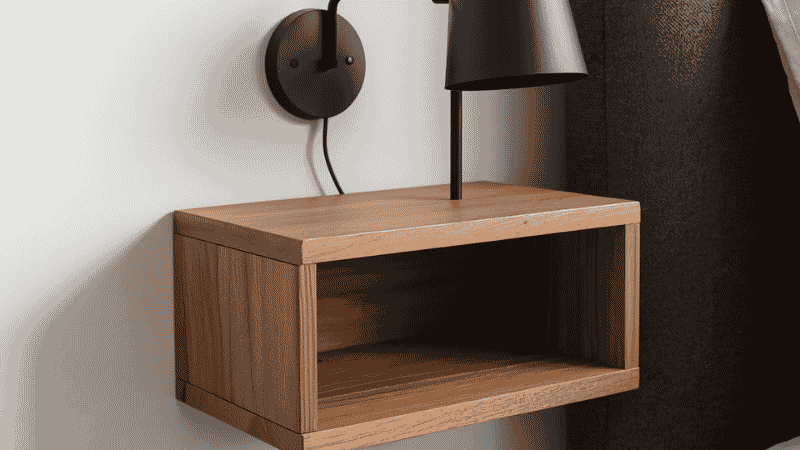
- The Matching Set Syndrome: Never buy the “set” (Bed + Dresser + Nightstands). It creates a repetitive, “showroom” look that feels heavy. Mix a wooden bed with wall-mounted metal nightstands to break up the visual mass.
Designer FAQ: Navigating Beds for Small Rooms
Q: Can a King bed ever work in a 10×10 room? Only if you embrace the “Nest” concept. You must eliminate all other floor-standing furniture. Use wall-mounted shelving and sconces exclusively. It’s a bold choice, but for those who prioritize sleep quality over floor space, it can feel incredibly luxurious.
Q: How high should a bed sit in a small room? Keep it low. A “Japandi” style low-profile bed keeps the visual weight near the floor, which creates the illusion of higher ceilings. The only exception is if you absolutely require under-bed bins, in which case a 12-inch clearance is your target.
Q: What rug size unifies a small bedroom? Avoid the “postage stamp” rug. A small rug sitting awkwardly in front of the bed makes the room feel disjointed. I recommend an 8×10 rug that sits under the bottom two-thirds of the bed, extending out into the room. It “anchors” the layout and makes the floor feel expansive.
Q: Are storage beds with drawers always a bad idea? Not always. They work perfectly if you have a “wide but shallow” room where the bed is centered and there is plenty of space on the sides. However, for “long and narrow” rooms, they are rarely functional.
Final Checklist for Small Bedroom Success
- [ ] Minimum 24 inches of clearance on primary walking paths.
- [ ] Tapered legs or recessed base to show the floor.
- [ ] No footboard to keep sightlines open.
- [ ] Wall-mounted lighting to reclaim nightstand space.
- [ ] Hydraulic storage chosen over side-drawers for narrow layouts.