
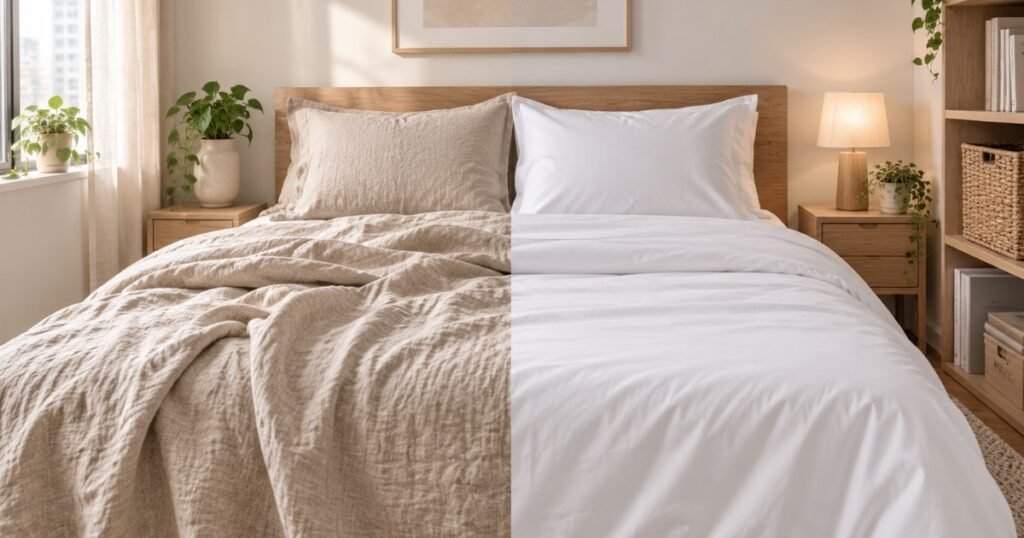
Shopping for new bedding sounds simple until you’re staring at two sets labeled linen and cotton, wondering which one will actually work better in your home. The linen vs cotton sheets debate isn’t really about finding a universal winner—it’s about choosing the fabric that fits how you sleep, how much storage you have, and how much maintenance you’re willing to deal with, especially if you live in a small apartment.
A higher price tag doesn’t always mean better sleep, and the softest fabric isn’t always the most practical. Things like breathability, durability, drying time, and even how much space a folded sheet set takes up can make a bigger difference than most people expect. In this guide, we’ll cut through the marketing and focus on what really matters, so you can choose the option that makes sense for your budget, your sleep style, and your space.
Quick Answer: Which Sheets Are Right for You
Forget trying to find a single winner. Linen and cotton are designed for different needs, so the better choice depends on your sleep habits, your budget, and the space you live in.
Choose linen if you:
- Sleep hot or deal with night sweats
- Want the strongest breathability available
- Like a relaxed, natural bedroom look and don’t mind wrinkles
- Value long-term durability and don’t mind paying more upfront
Choose cotton percale if you:
- Want that crisp, cool hotel-sheet feel
- Have a moderate budget
- Prefer bedding that folds easily and stores compactly
- Want low-maintenance, wrinkle-resistant fabric
Choose cotton sateen if you:
- Sleep on the cooler side already
- Prefer a soft, silky touch over crispness
- Like a bit of subtle sheen for a more luxe look
The best value setup for small apartments: a cotton fitted sheet paired with linen pillowcases and a linen duvet cover. This combination keeps the easy-care, easy-to-store benefits of cotton while adding breathability and texture through linen — without the storage burden or cost of a full linen set.
Linen vs Cotton Sheets at a Glance
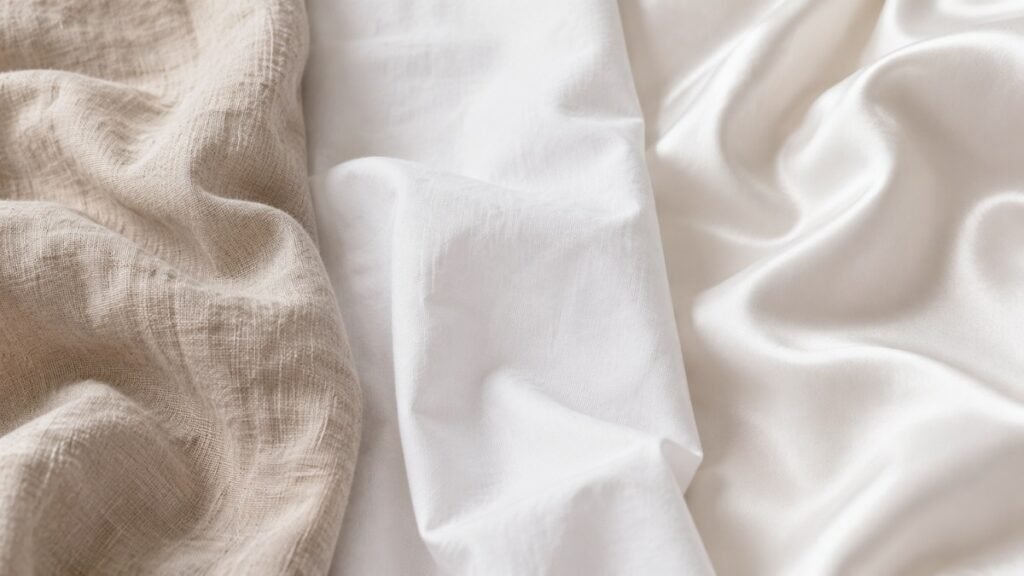
Before getting into the details, here’s a side-by-side comparison to help you match materials to your priorities.
| Factor | Linen | Cotton Percale | Cotton Sateen |
|---|---|---|---|
| Feel | Slightly rough at first, softens with washing | Crisp, cool | Smooth, subtly glossy |
| Breathability | ★★★★★ Best | ★★★★ Good | ★★★ Moderate |
| Moisture control | Wicks moisture fast, resists trapping heat | Absorbs moisture well | Traps more heat, less airflow |
| Durability | Excellent, can last decades | High | Moderate |
| Wrinkles | Noticeable, part of the natural texture | Minimal | Slight |
| Drying speed | Fast | Moderate | Slower |
| Folded storage size | Bulkier | Compact | Moderate |
| Price | Mid-to-high | Low-to-mid | Mid-to-high |
| Best for | Hot sleepers, natural-style bedrooms | Budget-conscious, tidy small spaces | Softness-first sleepers |
Many buyers don’t realize until after purchasing that “cotton” isn’t one single material. Percale and sateen are woven completely differently, which changes how breathable, glossy, and durable each one feels — if you buy based on a “100% cotton” label alone, you might end up with something very different from what you expected. For a deeper breakdown, check out Percale vs Sateen Sheets.
Why Do Linen and Cotton Feel So Different?
To understand why these two materials perform so differently, it helps to look at the fiber structure itself.
Linen Fiber, Explained
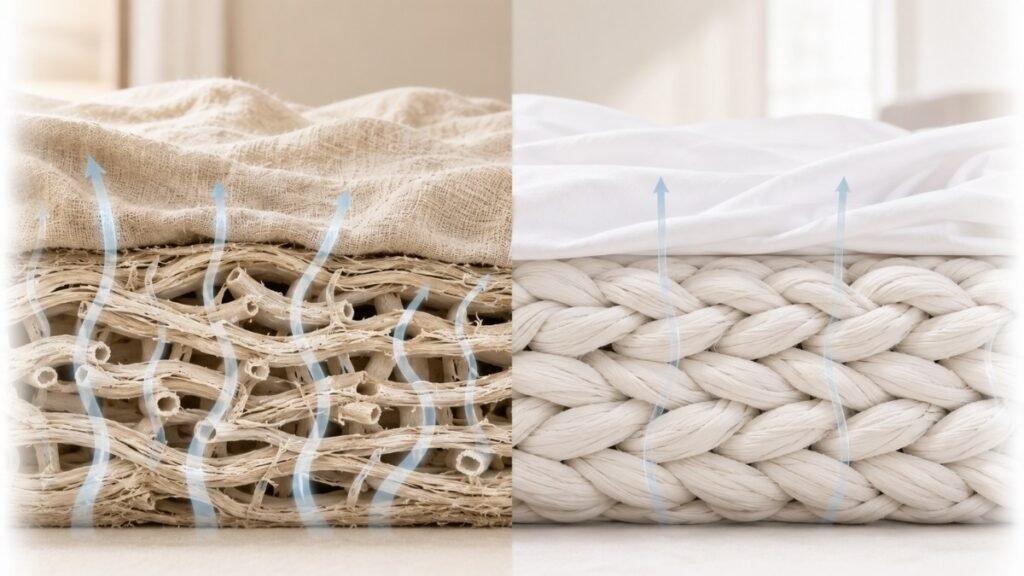
Linen sheets are made from the stalk fibers of the flax plant. These fibers are naturally hollow and slightly irregular in thickness — this is exactly why linen breathes so well and wrinkles so easily. The gaps between fibers let air move through quickly, but that same looseness makes it harder for the fabric to stay smooth.
Cotton Fiber, Explained
Cotton fiber comes from the fluffy fibers surrounding cotton seeds, and it’s finer, softer, and much more uniform than flax. That consistent structure is what allows cotton to be woven into smooth, low-wrinkle fabric — it’s the source of cotton’s signature silky feel.
Why Fiber Structure Changes Sleep Comfort
Fiber thickness and arrangement directly determine how fast a fabric breathes and absorbs moisture. Linen’s hollow structure lets heat and moisture escape quickly, which is the core reason it works so well for hot sleepers. Cotton’s finer, denser fibers feel softer against skin but don’t move air quite as efficiently.
New linen sheets often feel stiff and slightly rough — and that’s completely normal. A lot of first-time linen buyers open the package and think something’s wrong with it. In reality, linen fibers soften noticeably after repeated washing, typically becoming visibly softer after 5 to 10 wash cycles. It’s a fabric characteristic, not a defect. If you’re curious how natural fabrics fit into a small-space bedroom, it’s worth exploring how different materials hold up over time in tight living quarters.
Linen vs Cotton: Comparing What Really Matters
When you’re choosing between linen and cotton, a few factors make a much bigger difference than the rest. Here’s how the two compare where it counts.

Cooling & Breathability
Linen clearly outperforms both cotton weaves here, especially in humid or hot conditions. Cotton percale comes in second, and sateen trails behind because its tighter weave restricts airflow.
Softness Over Time
Linen starts out stiff but softens significantly with use, sometimes surpassing cotton in comfort after months of washing. Percale stays consistently crisp and doesn’t go through much of a softening process. Sateen is soft right out of the package, but that softness fades slightly over time.
Durability
Linen fiber is exceptionally strong and, with proper care, can last 10+ years, sometimes much longer. Quality cotton percale typically holds up for 3 to 5 years. Sateen, due to its looser weave, tends to show pilling or thinning after 2 to 4 years.
Washing & Care
Linen doesn’t need ironing — the wrinkles are part of the look — but it should avoid high heat when drying. Percale is low-maintenance and rarely needs ironing after drying. Sateen is more prone to snagging and needs gentler handling during washing.
Price vs Long-Term Value
Linen has the highest upfront cost, but its long lifespan can even out the annual cost. Percale offers the most balanced value overall. Sateen has the widest price range — cheap versions pill quickly, while higher-end options can cost nearly as much as linen.
Scorecard (out of 10)
| Factor | Linen | Cotton Percale | Cotton Sateen |
|---|---|---|---|
| Cooling & breathability | 9 | 7 | 5 |
| Softness (long-term) | 8 | 6 | 8 |
| Durability | 9 | 7 | 5 |
| Ease of care | 6 | 9 | 6 |
| Long-term value | 8 | 8 | 6 |
Linen has a real break-in period. It’s fairly common for first-time buyers to judge it after just one week and decide it’s not for them, sometimes returning it before giving it a fair chance. But based on how most people describe their experience, linen tends to reach its most comfortable state only after several washes — judging too early means missing its biggest advantage.
Which Sheets Are Better for Hot Sleepers?
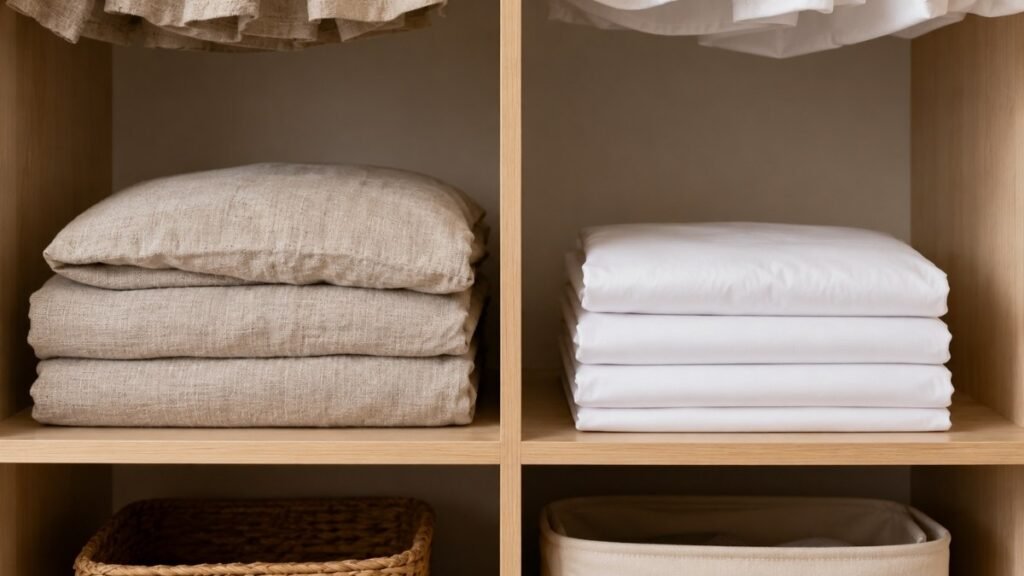
This is one of the most common questions people ask when comparing these materials: if you sleep hot or deal with night sweats, which one actually helps?
Short answer: most hot sleepers do best with linen, followed by cotton percale. Sateen usually isn’t the ideal choice.
Linen for Hot Sleepers
Linen’s hollow fiber structure moves air more efficiently, pulling moisture away from the skin instead of letting it build up. If you live somewhere humid, or you just naturally run warm at night, this difference is usually noticeable within the first few nights.
Cotton Percale for Hot Sleepers
If linen’s budget or initial roughness isn’t appealing, percale is a solid middle ground. It’s not as breathable as linen, but it still outperforms sateen, and its crisp texture avoids that clingy, damp feeling.
When Sateen Still Makes Sense
Sateen’s tighter weave traps more heat, making it less ideal for warm sleepers. But if you naturally sleep cool, or your bedroom stays air-conditioned year-round, sateen’s smooth, glossy feel is still a reasonable pick — breathability isn’t the only factor that matters.
Switching to linen won’t magically stop you from waking up sweaty, but most people do notice moisture evaporating faster and less clinginess against the skin. It’s worth setting realistic expectations here — the fabric can improve your sleep environment, but it can’t fully override your body’s own temperature regulation. For more detailed guidance, see Best Sheets for Hot Sleepers.
Choosing Sheets for a Small Apartment
If you live in a small apartment, bedding isn’t just about comfort. Storage space, drying time, and how easy the sheets are to care for can matter just as much as how they feel on the bed.
Which Takes Up Less Closet Space?
Cotton percale fibers are thinner and pack down tighter, so a folded set takes up noticeably less room than linen. A standard queen percale set folded down is roughly the size of a thick dictionary, while the same size in linen typically takes up 30–40% more space because of its looser, fluffier fibers. If your closet only has a single 20cm-tall shelf dedicated to bedding, this difference decides how many sets you can actually fit.
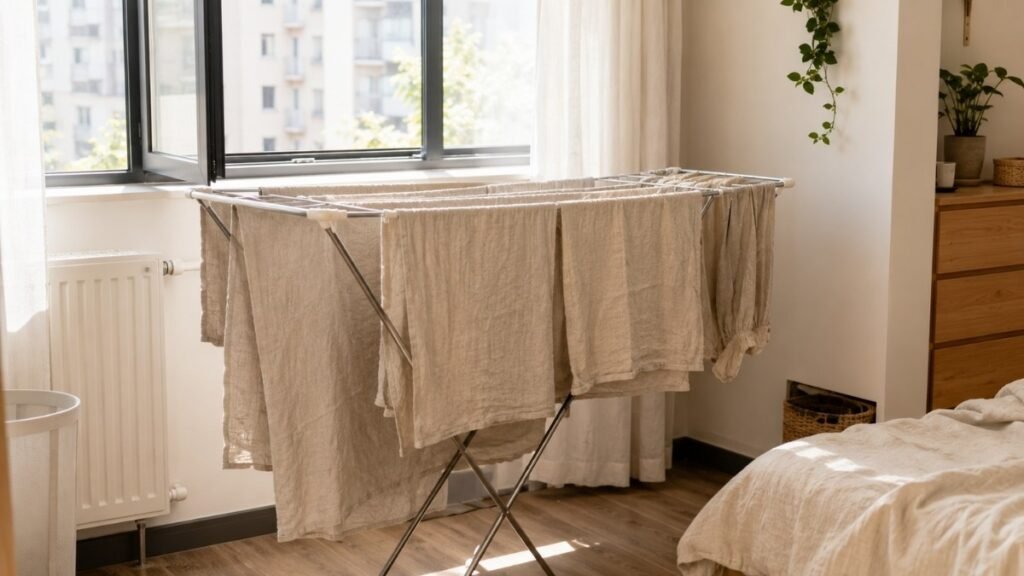
Which Dries Faster Indoors?
Linen actually dries faster than sateen, often around 30% quicker, thanks to its strong moisture-wicking and hollow fiber structure. Percale dries at a moderate, dependable pace. This matters a lot if you don’t have a balcony and can only air-dry indoors — slow-drying fabric means lingering dampness in a small space, which can lead to musty smells or even mold over time.
Which Looks Better Without Ironing?
Linen’s wrinkles are baked into its aesthetic — no ironing needed for a naturally relaxed look. Percale, on the other hand, barely wrinkles at all, which suits people who prefer a clean, tidy visual in a compact bedroom.
Limited drying space genuinely changes which fabric makes sense for you. Renters in studio apartments without a dedicated laundry area or balcony often find that choosing the wrong material turns into an ongoing battle with dampness and lingering odors. Drying fast and folding small often matters more day-to-day than which fabric looks more premium.
Small Bedroom Bedding Checklist:
- [ ] Check whether your closet/shelf clearance exceeds 20cm (this determines whether linen will fit)
- [ ] Confirm whether you have dedicated drying space (balcony/drying rack) or only indoor air-drying
- [ ] Assess your bedroom’s ventilation and humidity levels
- [ ] Decide whether you’re okay with linen’s natural wrinkled look
- [ ] Consider starting with one piece (like a pillowcase) before committing to a full linen set
For more space-saving strategies, take a look at guides on bedding storage ideas and small closet organization.
Common Beginner Mistakes When Buying Linen or Cotton Sheets
It’s surprisingly common to see people regret buying linen or cotton sheets after the first few nights. In many cases, the fabric isn’t the problem at all—it just wasn’t used, washed, or chosen with the right expectations.

Mistake #1: Believing Higher Thread Count Is Always Better
Most people default to checking thread count when shopping for cotton — but that number doesn’t apply to linen at all. Linen quality should be judged by GSM (grams per square meter), not thread count. As a general guide, 120–150 GSM is lightweight and best for summer, while 170–200 GSM is medium-weight and works year-round. Applying the “higher thread count = better” rule to linen is a classic mismatch.
Mistake #2: Judging Linen After One Night
New linen feels stiff, and that’s simply how the fiber behaves before it’s been washed. A lot of buyers return it after one disappointing night, missing the point where it actually becomes comfortable.
Mistake #3: Washing It the Wrong Way
Fabric softener breaks down the natural fiber structure of both linen and cotton over time, actually making the fabric less breathable and more prone to holding odors. High-heat drying speeds up fiber wear, and it’s especially damaging to linen, often causing shrinkage and fiber breakage.
Buying Mistakes Checklist:
- [ ] Judge linen quality by GSM, not thread count
- [ ] Don’t evaluate linen after a single wash — give it at least 3-5 washes first
- [ ] Skip fabric softener; a small amount of white vinegar works better for softening
- [ ] Choose low-heat drying or air-drying for linen
- [ ] Watch out for “linen blend” products — check the label for actual linen content
“My new linen sheets feel scratchy — did I get a bad batch?” is one of the most common concerns people run into. That roughness is simply how unwashed linen fiber feels before it’s had a chance to soften — it doesn’t mean anything’s wrong with the product. Understanding this upfront can save you from an unnecessary return.
Is Linen Really Worth the Extra Cost?
Price is often the biggest sticking point. Plenty of people start out convinced they want linen, then pause as soon as they compare prices. If you’re spending that much more, you naturally want to know whether the extra cost will actually pay off over time.
Upfront Cost
A standard queen linen set (flat sheet, duvet cover, two pillowcases) usually runs somewhere between $120 and $300, depending on origin and GSM. The same size in quality cotton percale typically costs $60 to $150. Purely on sticker price, linen has a noticeably higher barrier to entry.
Long-Term Value Comparison
Estimated Annual Cost (based on a standard queen set)
| Material | Purchase Price Range | Expected Lifespan | Estimated Cost Per Year |
|---|---|---|---|
| Linen (quality) | $180-300 | 10-15 years | ~$12-25/year |
| Cotton percale | $60-150 | 3-5 years | ~$18-30/year |
| Cotton sateen | $80-180 | 2-4 years | ~$25-45/year |
This table reveals something counterintuitive: even though linen costs more upfront, its extended lifespan can mean a lower annual cost than cotton, which needs replacing more often. Of course, this only holds true if it’s properly cared for and if you genuinely don’t mind the texture.
Who Should Skip Linen
If you might be moving soon, live in unstable rental housing, or simply have a tight budget right now, cotton percale is the more practical choice — the lower upfront cost doesn’t require years of use to pay off. Similarly, if you truly can’t stand that initial stiff texture, linen may not be worth it for you even if the long-term math favors it.
Most long-term linen owners say it takes a few months before it genuinely starts to feel “worth it.” That sense of value doesn’t show up immediately — it builds gradually as the fiber softens and its durability becomes apparent. That’s exactly why comparing purchase price alone tells an incomplete story.
Which Bedding Setup Makes the Most Sense?
There’s no need to spend more than your lifestyle calls for. Whether you’re furnishing your first apartment or upgrading your bedroom, here’s a simple way to match your budget with the right bedding setup.
Budget Setup ($40-70 total)
A full cotton percale set — fitted sheet, duvet cover, and pillowcases all in percale. Easy to care for, compact to store, and a solid choice for shared housing or anyone who might relocate soon.
Mid-Range Hybrid Setup ($70-130 total)
A cotton fitted sheet (handles skin contact and easy laundering), linen pillowcases (adds localized breathability), and a linen duvet cover (delivers most of the visual and airflow benefits). This hybrid approach often delivers better value than buying a full linen set outright. Pillowcases and duvet covers get the most skin contact and have the biggest visual impact on your bedroom, so putting linen there captures most of the upgrade. Meanwhile, fitted sheets get washed most often and benefit more from cotton’s durability and easy storage.
Premium Investment Setup ($180+)
A full quality linen set (flat sheet, duvet cover, pillowcases), ideally in the 170-200 GSM range — a good fit for anyone settled into a longer-term home who wants maximum breathability and a natural aesthetic.
Recommended Setup Comparison
| Setup | Budget Range | Core Advantage | Best For |
|---|---|---|---|
| Budget cotton set | $40-70 | Easy care, compact storage, wallet-friendly | Shared housing, short-term renters |
| Hybrid setup (recommended) | $70-130 | Best balance of breathability and storage | Most small-apartment dwellers |
| Full linen investment | $180+ | Maximum breathability, long-term durability | Long-term residents with flexible budgets |
Bottom line: mixing materials usually delivers a better balance of comfort, durability, and price than committing to a full set of one fabric.
FAQ
Should I stick to traditional cotton sheets or switch to linen?
It depends on how you sleep and how you live. If you tend to sweat at night, run hot, or care about long-term durability, linen offers a noticeable improvement. If easy care, compact storage, or a tighter budget matter more to you, sticking with cotton percale is a completely reasonable choice. Try one linen pillowcase first before committing to a full upgrade.
Are linen sheets rough and scratchy when you first buy them?
Yes, and that’s normal. It’s the natural, unwashed state of the fiber, not a sign of poor quality. The texture typically softens noticeably after 5 to 10 wash cycles. Don’t judge it based on the first night alone.
Is cotton percale or linen better for people who sleep hot?
Linen generally outperforms cotton percale for cooling and breathability, making it the better pick if you run warm or live somewhere humid. If budget is tight or you’re not sold on linen’s initial stiffness, percale is a solid compromise — it’s still more breathable than sateen.
How long do linen sheets last compared to cotton sheets?
With proper care, quality linen can last 10 to 15 years or longer. Cotton percale typically holds up for 3 to 5 years, while sateen usually lasts 2 to 4 years. This is part of why linen’s higher price tag doesn’t necessarily mean a higher cost over time.
Why do linen fitted sheets wear out faster than flat sheets or duvet covers?
Fitted sheets stretch around mattress corners and endure more friction, plus they get washed most frequently due to direct skin contact. That combination naturally wears them out faster than flat sheets or duvet covers, which is why many people pair a cotton fitted sheet with linen duvet covers and pillowcases.
How can I make my new linen sheets softer without damaging the fabric?
The most reliable method is simply washing it regularly, using low heat or air-drying. Adding a small amount of white vinegar in place of fabric softener can help soften the fibers naturally. Avoid high-heat drying and prolonged sun exposure, both of which accelerate fiber breakdown.
Can you use linen sheets in the winter, or are they only for summer?
Linen isn’t just a summer fabric. Its breathability shines in warm weather, but it also offers a surprising level of insulation in colder months — especially heavier weights (180+ GSM), which pair well with a duvet for winter use. It’s genuinely a year-round material, with summer being where it stands out most.
What is the best way to wash and dry linen sheets in small spaces or apartments?
Use a gentle, cold or low-heat wash cycle and avoid high-heat drying — hang-drying or laying flat works best. If you don’t have a balcony, an indoor drying rack combined with good airflow works fine, and linen’s naturally fast-drying fibers help shorten indoor drying time and reduce the risk of lingering dampness or odor.
🏠 Behind This Guide
Finding the right sheets isn’t just about choosing the softer fabric. If you live in a small apartment, things like storage space, drying time, and everyday maintenance can matter just as much as comfort.
That’s why this guide focuses on the questions people actually ask before buying new bedding:
- 🛏️ Everyday Comfort — How linen and cotton feel throughout the year.
- 📦 Small-Space Living — Storage, drying, and care in apartments.
- 💰 Long-Term Value — When spending more makes sense—and when it doesn’t.
Because the goal isn’t to prove that one fabric is better.
It’s to help you choose the one that fits the way you live.
Continue Exploring Better Bedding Choices
Once you’ve chosen the right sheets, these guides can help you build a bedroom that’s even more comfortable year-round:
- Percale vs Sateen Sheets: Which Cotton Weave Is Right for You → Learn how weave affects softness, breathability, and everyday comfort before you buy your next sheet set.
- Best Sheets for Hot Sleepers: What the Fabric Science Actually Says → See which materials stay cooler at night and why temperature regulation isn’t just about thread count.
- Mattress Pad vs Mattress Topper: Which One Do You Actually Need? → Understand the difference before spending money on the wrong layer.
- Cooling Pillow: Why the Fill Material Matters More Than the Cover → Discover why what’s inside your pillow has a bigger impact on sleep temperature than the fabric outside.
- Cooling Mattress Topper: Why Yours Probably Didn’t Work → Find the common reasons cooling toppers disappoint—and what to look for instead.
❤️ A Final Note
A comfortable home isn’t created by buying more—it’s created by choosing better.
At Grainv, we’re here to help you make the most of every square foot with practical furniture advice, smart layouts, and simple ideas that fit real homes and real budgets.
Our goal is simple: helping you create a home that feels bigger, more comfortable, and easier to live in.