

You’ve done the cooling sheets. Maybe you’ve done the cooling mattress topper. And still, at some point in the night, your pillow becomes a warm damp weight that you’re turning over every 30 minutes looking for a cool side that ran out two hours ago.
The pillow problem is different from the sheets problem, and it’s different from the mattress problem. Sheets and mattress toppers regulate the ambient temperature around your body. The pillow regulates the temperature of the part of you that generates the most body heat — your head. Research shows the head and neck account for a disproportionate amount of the body’s heat loss during sleep, which is exactly why a hot pillow disrupts sleep so reliably even when the rest of the bed is reasonably comfortable.
The cooling pillow market has responded to this with an enormous volume of products, nearly all of which lead with a cool-to-touch cover and bury the fill material in the fine print. That’s backwards. The cover is what you feel for the first 10 minutes. The fill is what you sleep on for the next 7 hours. This guide explains the fill materials that actually maintain cooler temperatures throughout the night, which cover materials help versus hurt, and how to match a pillow to your specific sleep position — because a cooling pillow that’s wrong for how you sleep will cause neck pain before it causes a cooler night.
Key Takeaways
- Fill material determines all-night cooling; cover material determines first-contact cooling: Gel memory foam fill that retains heat will defeat even the most breathable bamboo cover — choose fill first, cover second
- The five fill materials that matter for hot sleepers: Buckwheat (best airflow), shredded latex (best balance), shredded memory foam with gel (adequate), down/down alternative (variable), solid memory foam (avoid)
- Loft matching to sleep position is not optional: A cooling pillow set too high or too low for your sleep position creates the neck tension that makes you shift position — and every position shift wakes you up, making the cooling properties irrelevant
- A 2021 study in the Journal of Physiological Anthropology found that head skin temperature is one of the strongest predictors of sleep onset: A cooler head-sleep environment reduces the time it takes to fall asleep, which is why pillow temperature has an outsized effect on sleep quality relative to other bedding
- “Cool to touch” fabric ratings measure initial contact, not sustained temperature: Most cool-touch covers reach ambient temperature within 10–20 minutes of contact — look for moisture-wicking properties alongside thermal conductivity for sustained benefit
The Fill Problem: Why Most Cooling Pillows Don’t Stay Cool
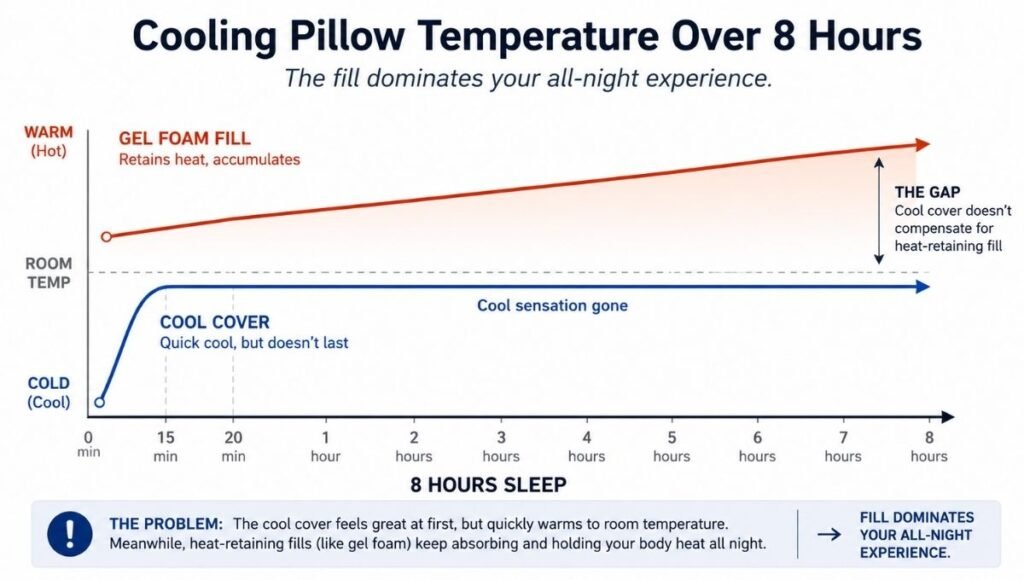
Here’s the honest version of how most “cooling pillows” work: there’s a cover made from bamboo, Tencel, or a proprietary cool-touch fabric that feels genuinely cold when you first lie down. Underneath that cover is dense gel-infused memory foam that, like all memory foam, eventually retains the heat your head generates over 7–8 hours of sleep.
The cool-touch sensation lasts until the cover reaches skin temperature — typically 10–20 minutes. After that, the foam’s thermal properties become the dominant factor, and dense foam is a heat trap regardless of the gel particles embedded in it.
This is the same physics problem as the cooling mattress topper situation: gel foam absorbs heat faster than it dissipates it. The gel is better than standard foam, but “better than standard foam” is a low bar for a hot sleeper.
The fills that genuinely address this problem do so through structure rather than chemistry. They allow air to move through the pillow rather than trying to absorb and dissipate heat through conductive materials.
The Five Fill Materials: An Honest Ranking
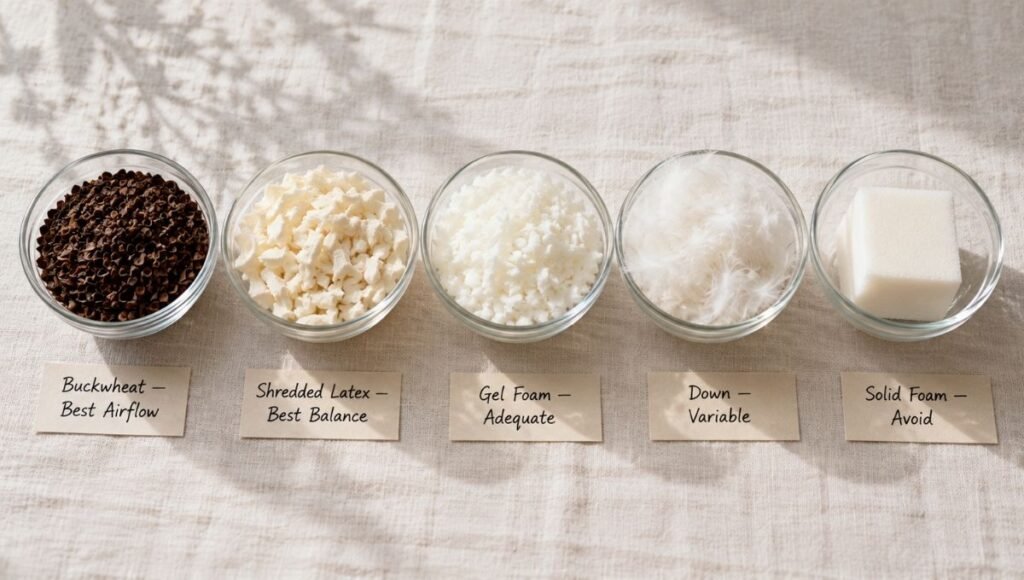
1. Buckwheat: The Most Breathable, If You Can Adapt to It
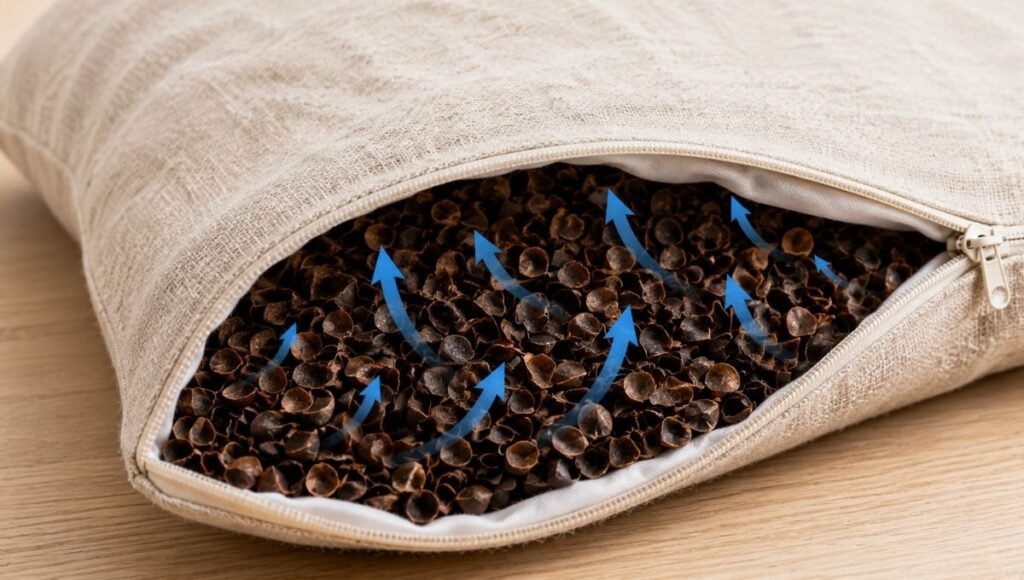
Buckwheat pillows are filled with the hulls of buckwheat seeds — small, rigid, concave shells that create a loose structure with significant airflow between the individual pieces. Air moves through the fill throughout the night rather than being trapped in dense foam pockets. The pillow stays at near-room temperature because it’s essentially a ventilated structure rather than an insulating one.
The honest downsides: Buckwheat pillows are heavy (a queen size can weigh 8–12 lbs), they shift audibly when you move, and they feel firm in a way that many people accustomed to soft foam pillows find jarring at first. There’s an adaptation period of approximately 1–2 weeks for most people.
Who it’s for: Hot sleepers who prioritize temperature regulation above all else and are willing to adapt to a different feel. Side and back sleepers generally adapt more easily than stomach sleepers because the loft can be adjusted by removing fill.
Loft adjustment: Buckwheat pillows come with adjustable fill — you can remove hulls to reduce height or add them to increase it. This is a genuine advantage over fixed-fill pillows for loft matching.
2. Shredded Latex: The Best Balance
Shredded natural latex is the fill that most reliably delivers both reasonable cooling and good support. Unlike solid latex, shredded latex has gaps between the pieces that allow air circulation. Unlike memory foam, latex doesn’t compress under heat — it springs back, maintaining the air channels rather than collapsing them flat as you sleep.
Natural latex also sleeps cooler than synthetic latex and significantly cooler than memory foam because its open-cell structure doesn’t trap air in dense pockets the way foam does.
The honest downsides: Quality shredded latex pillows cost more than foam alternatives — typically $80–$150. Latex has a slight natural scent when new that dissipates over 1–2 weeks with airing. Some people with latex sensitivities need to avoid this category entirely.
Who it’s for: Hot sleepers who want a balance of cooling, support, and familiar pillow feel without the adaptation required for buckwheat. Works for all sleep positions with loft adjustment.
3. Shredded Memory Foam (Gel-Infused): Adequate, With Caveats
Shredded memory foam with gel infusion — the fill used in the widely recommended Coop Home Goods adjustable pillow — is the most popular cooling pillow fill currently on the market. The shredded format creates more airflow than solid memory foam, and the gel particles improve heat conductivity versus standard foam.
My honest assessment: this category is good, not great, for serious hot sleepers. The shredding creates air channels, but memory foam clusters still retain heat more than latex or buckwheat. For moderate hot sleepers — people who run warm rather than actively sweating — shredded gel memory foam is a genuine improvement over a standard pillow. For people who wake up damp regularly, it may not be enough.
The advantage of this category: Adjustability. Most shredded foam pillows allow you to add or remove fill to hit your ideal loft, and the feel is familiar to people accustomed to foam pillows.
Who it’s for: Moderate hot sleepers who find buckwheat too firm or latex too expensive, and who want an adjustable fill that doesn’t require a significant adaptation period.
4. Down and Down Alternative: Highly Variable
Down and down alternative pillows are not inherently hot — premium down pillows with good construction allow significant airflow. The problem is that cheap down alternative (polyester fiberfill) can be as heat-retaining as bad foam, while quality down allows more airflow than most foam pillows.
For hot sleepers, the relevant question is fill power (for down) and fiber type (for down alternative):
- Down fill power 600+: Higher fill power means less material needed for the same loft, which means less density and better airflow
- Down alternative: Look for microfiber rather than polyester fiberfill — microfiber clusters allow more airflow than solid polyester strands
Who it’s for: Hot sleepers who strongly prefer the soft cloud-like feel of down and are willing to pay for quality down (600+ fill power) rather than accepting cheap down alternative.
5. Solid Memory Foam: Avoid for Hot Sleepers
Solid memory foam is the worst fill option for hot sleepers regardless of gel infusion, graphite addition, or copper coating. The dense solid structure traps air and heat with no escape path. Gel particles slow the heat absorption slightly; they don’t change the fundamental thermal physics of a sealed foam block.
If your current pillow is solid memory foam and you sleep hot, replacing it with any other fill type on this list will likely improve your temperature experience.
Cover Materials: What Actually Helps vs. What’s Just Marketing
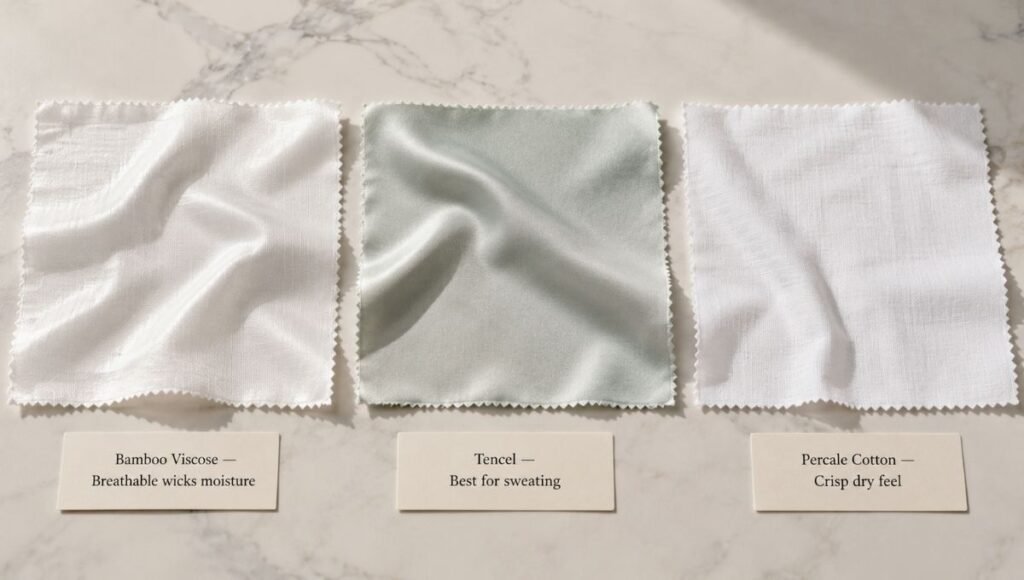
The cover is secondary to the fill but not irrelevant. The right cover extends the cool-feel window and wicks moisture away from your face and neck during the night.
Bamboo viscose: The most commonly used cover material for cooling pillows. Genuinely breathable and moisture-wicking when quality is high. Look for 100% bamboo rather than bamboo blends — blended covers often lose the breathability benefits. The cool-to-touch sensation with bamboo is real but fades within 10–20 minutes of contact.
Tencel (lyocell): Similar moisture-wicking properties to bamboo, with a slightly silkier feel. Excellent for sweaty sleepers because it manages moisture exceptionally well. Derived from eucalyptus fibers with sustainability credentials.
Percale cotton: Less frequently used as a pillow cover but highly effective for hot sleepers who find bamboo or Tencel too slippery. The same open-weave breathability that makes percale sheets cooling applies to pillow covers. Crisp, dry feel rather than silky.
Phase-change material (PCM) covers: Some premium pillows use covers with phase-change materials embedded in the fabric — these absorb body heat as they transition from solid to liquid state (at around body temperature), then slowly release it. The cooling window is longer than standard cool-touch covers — typically 30–60 minutes. At the price point these appear ($150–$200 pillow covers), the benefit may not justify the cost for most buyers.
What to avoid: Polyester microfiber covers marketed as “cooling.” These are the least breathable option in the cooling pillow cover category. Any cooling effect is entirely from initial thermal conductivity, with no moisture management and poor ongoing breathability.
Loft Matching: The Dimension Nobody Talks About
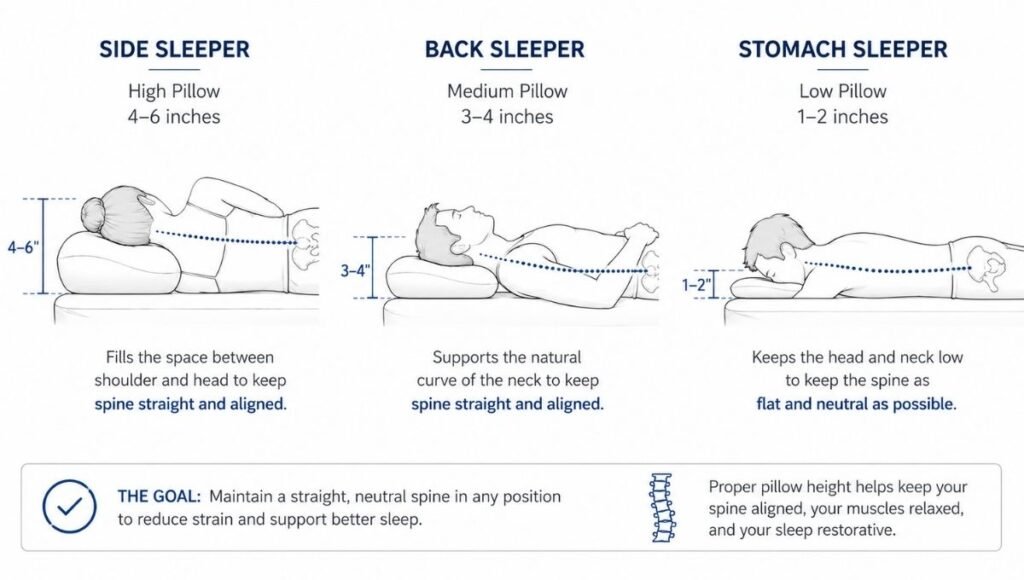
A cooling pillow that’s wrong for your sleep position is a pillow you’ll move around all night — which produces exactly the sleep disruption that temperature management is trying to prevent.
Side sleepers: Need the highest loft — typically 4–6 inches — to fill the space between the shoulder and head when lying on their side. Too low and the neck drops laterally, causing tension that wakes you up regardless of temperature. Side sleepers typically need to add fill when using adjustable pillows.
Back sleepers: Need medium loft — typically 3–4 inches — to support the natural cervical curve without pushing the head too far forward. Back sleepers with forward head posture (from desk work) often need slightly lower loft than average.
Stomach sleepers: Need the lowest loft — 1–2 inches, or no pillow at all for the head. A thick pillow under the head while stomach sleeping hyperextends the neck. Stomach sleepers should prioritize a thin, soft pillow for the head and consider a pillow under the abdomen for spinal alignment.
The adjustment test: Lie in your sleep position with the pillow. Your spine should form a straight line from head to tailbone. If your neck bends up or down from the spine line, the loft is wrong. Most adjustable pillows allow you to add or remove fill to hit this target.
Best Pillow for Night Sweats: A Different Problem
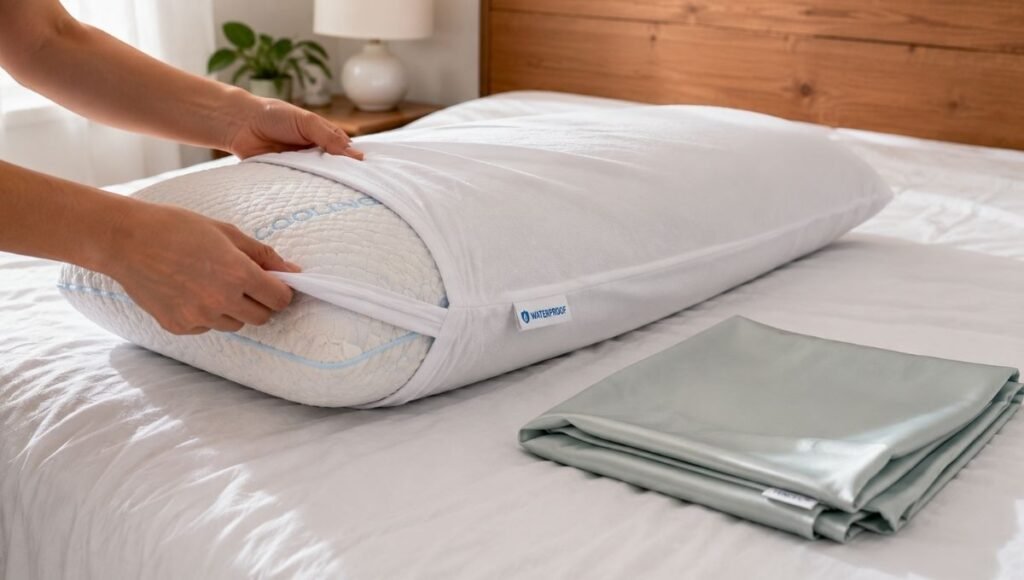
Night sweats — waking genuinely drenched rather than just warm — have a different pillow requirement than general hot sleeping. The primary need shifts from temperature management to moisture management.
For night sweats, the pillow cover’s moisture-wicking speed matters more than its initial cooling sensation. The fill’s ability to dry between uses matters for hygiene and long-term freshness.
Cover priority for night sweats: Tencel or high-quality bamboo viscose, both of which wick moisture away from skin faster than cotton or polyester. A cooling pillow with a Tencel cover used with a Tencel pillowcase creates two moisture-wicking layers — the inner cover manages moisture from the fill, the pillowcase manages moisture from the face and neck.
Fill priority for night sweats: Shredded latex or buckwheat, both of which dry faster than foam fills. Memory foam absorbs moisture and dries slowly, which creates hygiene issues with regular night sweating.
The pillow protector: For night sweaters, a waterproof pillow protector between the fill and the pillowcase is worth the $15–$30 investment. It prevents moisture saturation of the fill, extends the pillow’s useful life significantly, and can be washed weekly without washing the pillow itself.
As with cooling mattress toppers, frequent night sweating across all seasons is worth a conversation with a doctor — hormonal, thyroid, and medication-related causes are common and treatable. Cooling pillows help with comfort regardless of cause.
The Complete Cooling Head Environment
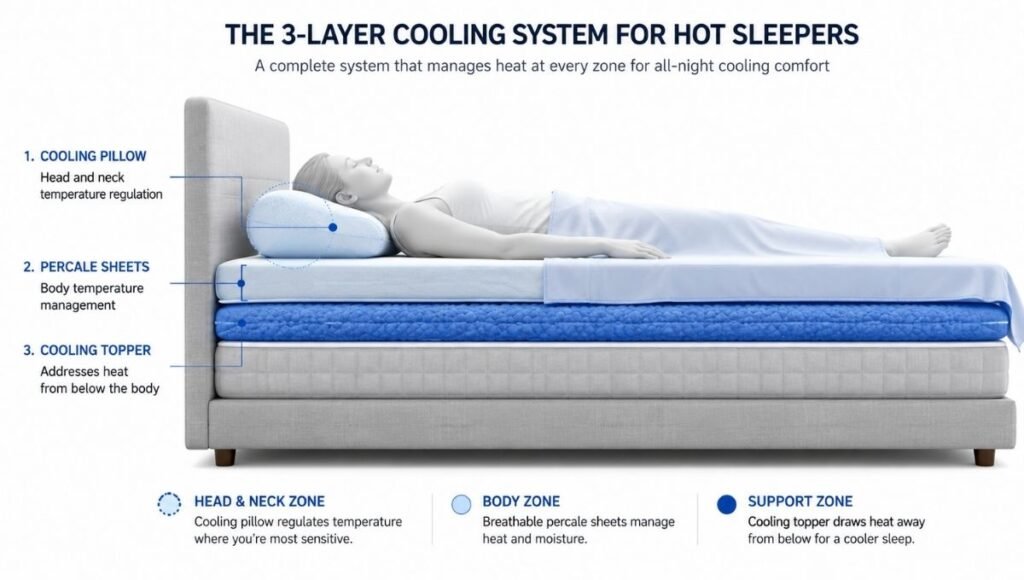
A cooling pillow works best as part of a system rather than as a standalone purchase. If you’ve addressed the pillow and are still waking up hot around the head and neck:
Pillowcase matters: Your pillowcase sits between your face and the pillow cover. A polyester or high-thread-count sateen pillowcase can defeat the breathability of even the best cooling pillow cover underneath. Percale cotton or linen pillowcases are the right choice for hot sleepers — the same logic as cooling sheets, applied to the pillowcase.
Pillow count: More than one pillow under the head increases the insulating layer between your head and the ambient air. If you sleep with two pillows stacked, try one — the thermal difference is meaningful.
The bedroom temperature: No pillow engineering compensates for a bedroom at 82°F. The National Sleep Foundation recommends 65–68°F for optimal sleep. Pillow cooling works best when the room temperature is in this range, providing a manageable thermal environment that the pillow can maintain rather than fighting against.
For the sheets and mattress topper side of this equation, our best sheets for hot sleepers guide and cooling mattress topper guide cover those layers of the sleep temperature system.
If Your Cooling Pillow Isn’t Working
If it felt great the first night and then stopped: The fill has compressed or the cover has reached equilibrium temperature. For foam fills, try fluffing and airing the pillow for 30 minutes before bed — removing accumulated body heat from the fill before you sleep on it. For covers, washing the pillow every 2–3 weeks removes oil and debris buildup that reduces breathability.
If the pillow feels fine temperature-wise but you still wake up hot: The issue is elsewhere in the system — likely the mattress topper layer or the duvet. The pillow can only regulate head and neck temperature; if the rest of the body is overheating, a better pillow won’t solve it.
If the cooling pillow is comfortable but your neck hurts: The loft is wrong. Adjust fill if the pillow is adjustable; if it’s not adjustable, return it and buy an adjustable version at the correct loft for your sleep position.
FAQ: Cooling Pillow
Do cooling pillows actually work? Depends on the fill. Buckwheat and shredded latex pillows genuinely maintain lower temperatures throughout the night through structural airflow. Shredded gel memory foam is adequate for moderate hot sleepers. Solid memory foam with gel or copper infusion provides a brief initial cooling effect that fades within minutes. The cover material affects first-contact feel; the fill determines all-night performance.
What is the best cooling pillow for hot sleepers? For maximum cooling: buckwheat fill with a bamboo or Tencel cover. For the best balance of cooling and familiar pillow feel: shredded latex with a Tencel or percale cotton cover. For adjustability and moderate cooling: shredded gel memory foam (Coop Home Goods adjustable is the most widely recommended in this category). Match your choice to sleep position loft requirements as well as cooling preference.
What pillow is best for night sweats? For night sweats, prioritize moisture management alongside cooling. A shredded latex or buckwheat fill (both dry faster than foam) with a Tencel cover, used with a Tencel pillowcase and a waterproof pillow protector. Avoid solid memory foam for night sweats — it absorbs moisture and dries slowly, creating hygiene issues.
How long does a cooling pillow stay cool? Cool-touch cover sensation: 10–20 minutes. Shredded latex or buckwheat sustained cooling: throughout the night (airflow-based, not absorption-based). Gel memory foam: initial cool sensation fades within 15–30 minutes; ongoing benefit is “cooler than standard foam” rather than actively cool.
Can you wash a cooling pillow? Depends on the fill. Shredded memory foam and down/down alternative: machine washable, low heat, fully dry before use. Latex: spot clean only or use a pillow protector — machine washing damages latex structure. Buckwheat: remove the hulls before washing the cover; hulls cannot be washed. Always check manufacturer instructions — improper washing voids most pillow warranties.
The Bottom Line
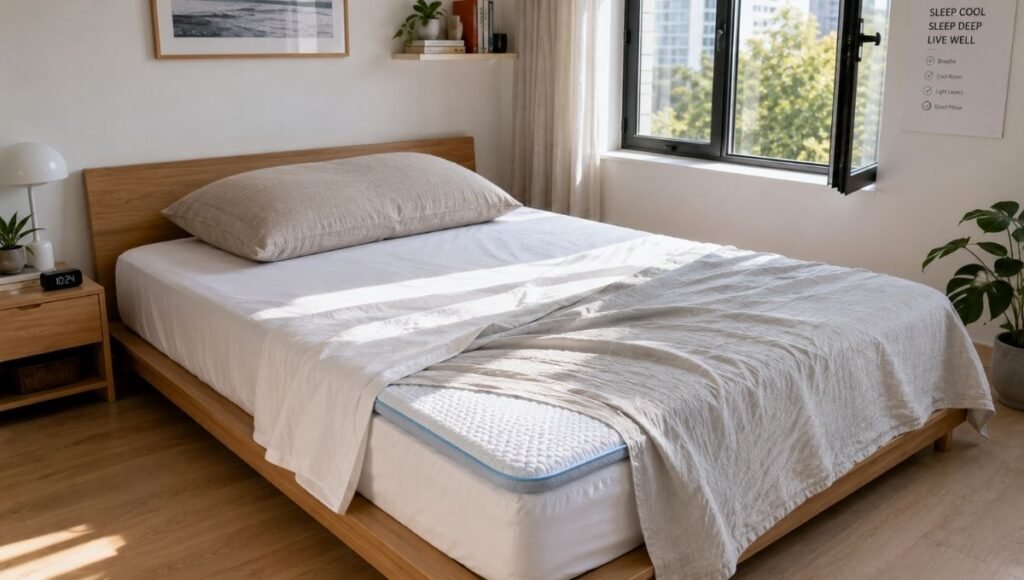
The cooling pillow market is full of products that lead with cool-touch covers and bury the fill material. The cover gives you 10–20 minutes of cold-to-touch sensation. The fill determines whether you sleep cool for the next 7 hours.
Buy fill first. For serious hot sleepers: buckwheat or shredded latex. For moderate hot sleepers who want a more familiar feel: shredded gel memory foam in an adjustable pillow. Match the loft to your sleep position before finalizing any choice — a cooling pillow that’s the wrong height will cause enough sleep disruption to make the temperature improvements irrelevant.
And pair it with the right pillowcase — percale cotton or linen — so the last layer between your face and the pillow isn’t undoing what the pillow itself is trying to do.
This is the third piece in Grainv’s hot sleeper bedding series. For the sheets layer — percale cotton, linen, and Tencel with real thread count science — see our best sheets for hot sleepers guide. For the mattress layer — passive vs active cooling, why gel foam fails on memory foam beds — see our cooling mattress topper guide. And for the bedroom environment that makes all of it work — layout, airflow, and temperature — our small bedroom layout guide has the full picture.
References
- Okamoto-Mizuno, K., & Mizuno, K. (2012). Effects of thermal environment on sleep and circadian rhythm. Journal of Physiological Anthropology, 31(1), 14. (Research on head and neck temperature regulation during sleep and sleep quality outcomes)
- Haskell, E. H., Palca, J. W., Walker, J. M., Berger, R. J., & Heller, H. C. (1981). The effects of high and low ambient temperatures on human sleep stages. Electroencephalography and Clinical Neurophysiology, 51(5), 494–501. (Foundational research on ambient temperature and sleep stage distribution)
- National Sleep Foundation (2023): Pillow care and replacement guidelines; optimal sleep environment temperature recommendations (65–68°F / 18–20°C)
Published on Grainv.com | Category: Bedroom | Related: Best Sheets for Hot Sleepers, Cooling Mattress Topper, Small Bedroom Layout