
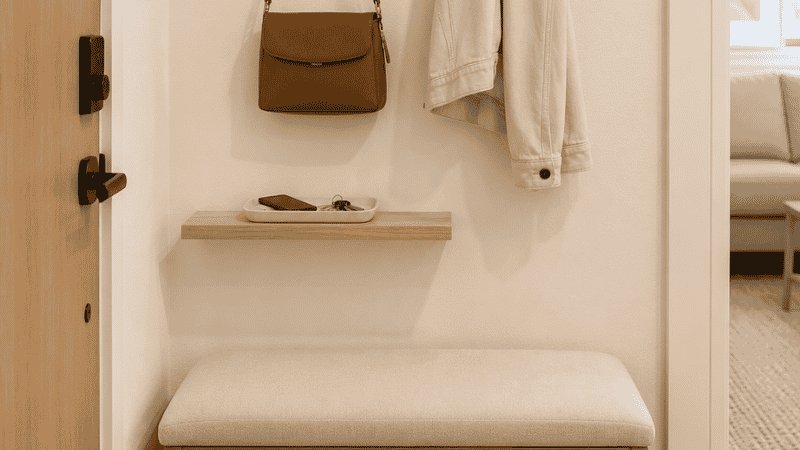
Every apartment has a version of the same problem at the front door. Shoes that were “temporarily” left just inside the entrance six months ago. Bags that land on the floor because there’s nowhere else to put them. Coats piled on a single hook that was never meant to hold three layers. The spot that’s supposed to be the first impression of your home is the one that gets the most traffic and the least furniture.
The entryway storage bench is the most space-efficient single piece of furniture you can put in an apartment entrance — not because it holds the most, but because it solves three problems at once. It gives you a place to sit while putting on shoes, which you were doing anyway while crouching or balancing on one foot. It stores shoes inside or underneath, which were on the floor anyway. And it creates a defined landing zone for bags and items coming through the door, which were migrating to every other flat surface in the apartment.
This guide covers what to look for in an entryway storage bench — specifically the dimensions, storage configurations, and material choices that work in small apartment entryways — and how to build a complete entry system around it that takes under 10 minutes a day to maintain.
Key Takeaways
- An entryway storage bench should be 14–18 inches deep: Deeper than 18 inches and it starts blocking the entry door swing or the walkway; shallower than 14 inches and the seating function becomes uncomfortable for an adult
- Bench height of 17–19 inches matches standard chair seat height and makes shoe-putting-on and sitting while changing a comfortable motion rather than a crouch
- A 36-inch bench holds 4–6 pairs of shoes underneath or in an open shelf, a 48-inch bench holds 6–8 pairs — the most common reference people want when shopping
- The storage bench anchor effect: Research on residential entry behavior shows that a defined “drop zone” near the front door reduces the spread of clutter into other rooms — objects deposited in an organized entry system stay there rather than migrating to the kitchen counter or sofa
- Renter-friendly entryway systems: The bench itself requires no installation; hooks and shelves above it can be mounted with Command strips rated 7.5–10 lbs per strip, keeping the system completely removable
Entryway Storage Bench Dimensions: What Fits in a Small Apartment Entry
Most apartment entries are not a room — they’re a transition zone between the front door and the living space, typically 36–60 inches wide and 24–48 inches deep. The furniture that goes here needs to work within those constraints while leaving enough clearance for the door to open fully and two people to pass comfortably.
Width: Match Your Entry, Not Your Ambition
The most common mistake is buying a bench that’s too long. A 48-inch bench in a 42-inch-wide entry blocks the door and forces a sideways shuffle to get past it. Before shopping, measure three things:
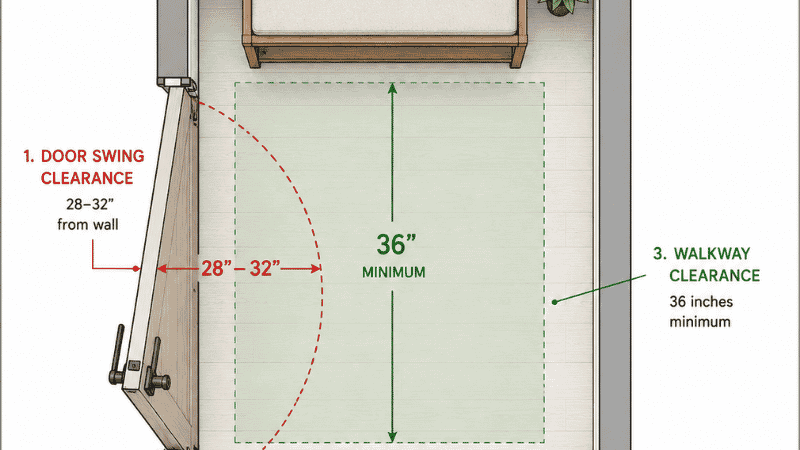
Door swing clearance: Open your front door fully and note how far into the entry it swings. A bench placed against the wall adjacent to the door hinge side needs to clear the door at its widest point — usually 28–32 inches from the wall.
Entry width: Measure the width of the space between the door frame and the nearest wall or obstacle. This is your maximum bench length, minus 6 inches of breathing room.
Walkway clearance: After placing the bench, you should have at least 36 inches of clear walking space to move past it toward the apartment interior. In narrow entries under 42 inches wide, a slim bench (14–16 inches deep) is essential to maintain this clearance.
Practical width ranges:
- Entry under 42 inches wide: 24–32-inch bench maximum
- Entry 42–60 inches wide: 36–48-inch bench
- Entry over 60 inches wide: 48-inch bench or two 24-inch benches flanking the entry
Depth: The Most Important Dimension No One Checks
Bench depth determines whether it functions well as seating and whether it blocks the doorway.
14 inches deep: The minimum for comfortable adult seating — the thigh rests on the front half of the seat, which is adequate for the brief sitting motion of shoe-changing. Works well in entries under 48 inches wide where every inch matters.
16 inches deep: The sweet spot for most entryway storage benches. Comfortable seating depth, fits standard entry widths, and typically provides enough interior cabinet depth to hold folded shoes without crushing them.
18 inches deep: The maximum recommended for small apartment entries. Beyond 18 inches, the bench starts to consume meaningful walkway space and can conflict with the door swing in entries under 48 inches wide.
Height: Sit Comfortably While Changing Shoes
Standard entryway bench height is 17–19 inches from the floor to the seat surface. This matches standard chair and sofa seat height — comfortable for most adults to sit, change shoes, and stand without an awkward motion.
Benches under 15 inches feel too low and require a full crouch to use. Benches over 20 inches feel like a step stool rather than a seat. If you’re unusually tall (over 6’2″) or short (under 5’2″), adjust by 1–2 inches in the appropriate direction.
Storage Configurations: Open Shelf, Closed Cabinet, or Cubby?
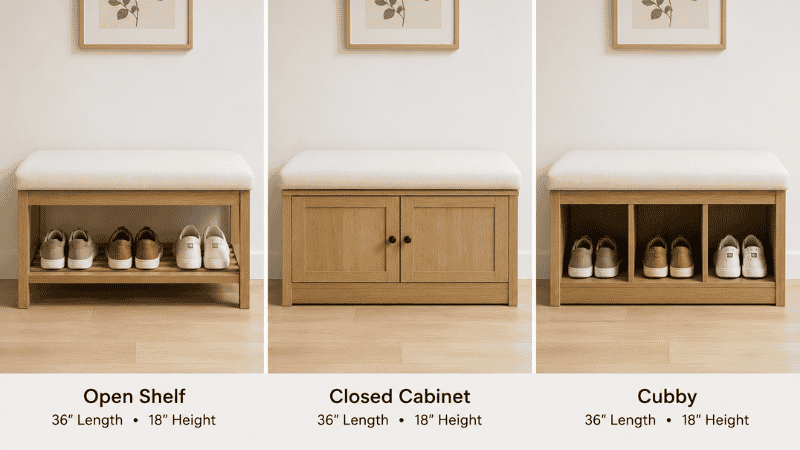
The internal storage configuration determines what the bench holds and how it looks from the entrance. Three main configurations exist, each with distinct trade-offs.
Open Bottom Shelf (Most Common, Most Flexible)
The simplest configuration: a flat shelf or slatted rack at the bottom of the bench, accessed by sliding shoes under the bench from the front. The bench seat is solid; the lower section is open on the front face.
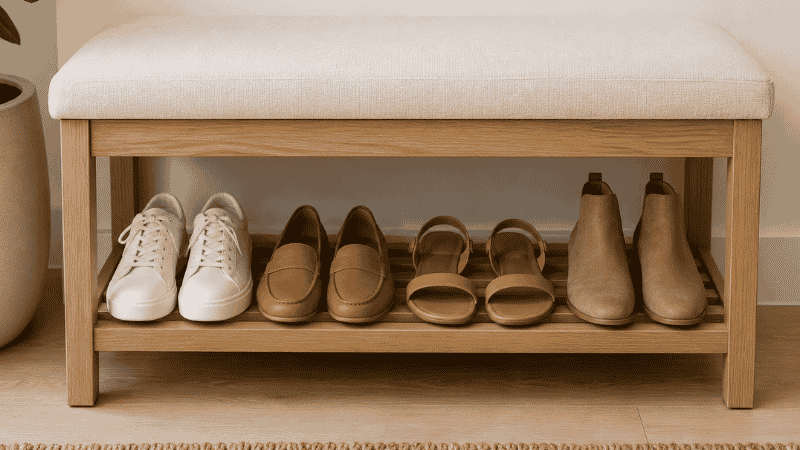
Capacity: A 36-inch bench holds 3–4 pairs of shoes on a single open shelf (laying flat). Add a second tier within the lower section and capacity increases to 5–7 pairs.
What it’s best for: Daily shoes — the ones you actually wear, rotated in and out regularly. Because the storage is open and fully visible, it incentivizes keeping only current-season shoes here.
Trade-off: Visible from the entry. If the shoes are neat, this looks intentional and lived-in. If they’re piled, the open shelf amplifies the visual chaos rather than containing it.
Closed Cabinet with Door or Drawers
A bench with closed-front storage — either a hinged door that opens to reveal shelving, or drawers that pull out — contains the shoe storage from view. From the entry, the bench looks like a clean upholstered or wood surface with no visible shoes.
Capacity: A 36-inch bench with hinged doors holds 4–6 pairs per shelf level, with typically 2 shelf levels = 8–12 pairs total. More than twice the capacity of an open shelf at the same footprint.
What it’s best for: Apartments where the entry is directly visible from the living room, anyone with more than 6 pairs of current-season shoes, or anyone who prefers a cleaner visual profile.
Trade-off: Requires consistently closing the doors. If the habit doesn’t form, the doors stand open and the storage appears messier than an open shelf would. The mechanism (hinges, drawer slides) can loosen over time on budget versions.
Cubby-Style Storage
A bench with individual cubbies — typically square openings that each hold one pair of shoes or a basket — provides defined compartments that organize shoes by pair without additional work. Popular in family entries; works equally well for single occupants who want organizational structure built in.
Capacity: A 36-inch bench with 3 cubbies holds 1 pair per cubby plus basket storage for 3 pairs = 6 pairs. The individual compartments make it easier to find specific shoes than a pile on an open shelf.
What it’s best for: People who have a defined rotation of shoes they want to access easily, households with multiple people’s shoes in the same entry, anyone who wants structure without requiring a folding habit.
Trade-off: Cubbies with fixed dividers can’t accommodate larger shoes (boots, platform shoes, thick-soled sneakers) without a cubby wasted. Check the interior dimensions of each cubby before purchasing — minimum 12 × 5 × 6 inches per pair.
The Complete Entryway Storage System: Bench + Hooks + Shelf
An entryway storage bench alone solves the floor storage problem. An entryway system — bench plus hooks above plus a shelf at shoulder height — solves the entire entry problem: shoes, outerwear, bags, mail, and daily carry items.
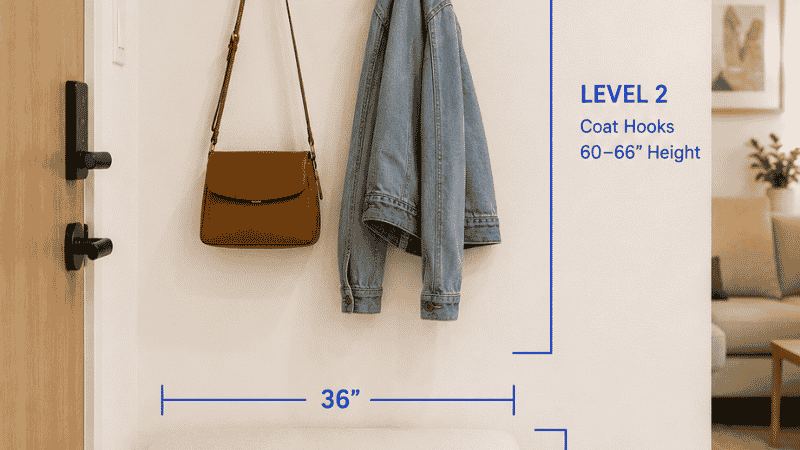
The Entryway System Formula
Level 1 — Floor zone (bench): Shoes, daily bag, items that entered the apartment today and will leave tomorrow. The bench seat provides a surface for items in transit; the storage below holds the current shoe rotation.
Level 2 — Coat zone (hooks at 60–66 inches height): 2–4 hooks for outerwear, one per regular coat plus one spare for guests. At 60–66 inches height, coats hang at a comfortable reach without dragging on the bench surface below. Minimum 2 hooks; 4 hooks handles a two-person household.
Level 3 — Shelf zone (above hooks at 70–78 inches height): A narrow shelf (8–10 inches deep) for items that live at the entry: a small tray for keys, a phone charger, sunglasses, and seasonal accessories. This shelf removes these items from the bench surface and keeps the seating area clear.
Renter Installation: No-Drill Entryway System
For renters who can’t drill into walls, the system still works:
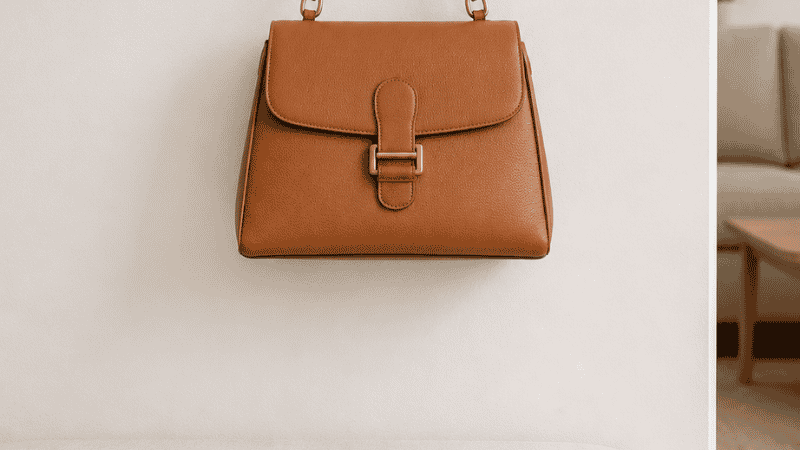
Hooks: Command strips rated for the weight. A single coat on a good hanger weighs 2–4 lbs. Four hooks each holding one coat = 8–16 lbs total. Command large strips rated 7.5 lbs each — two strips per hook = 15 lbs capacity per hook. More than adequate for a winter coat.
Shelf: A freestanding shelf unit (a narrow 10-inch-deep bookshelf standing beside the bench) replaces the wall-mounted shelf without any installation. Less elegant but fully functional.
Bench: No installation required. Freestanding. Can be moved for cleaning or repositioned.
What to Look for When Buying an Entryway Storage Bench
Seat Material and Durability
The entry bench seat takes the highest-contact use of any upholstered piece in the apartment — people sit on it in outdoor clothing, set damp bags on it, and in many households it sees daily use from multiple people. Material selection here is more practically driven than in the living room.
Upholstered bench tops: Fabric requires the most maintenance in an entry context. Spills from outdoor clothing, mud transfer from shoes, and daily contact make light-colored fabric problematic. If fabric, choose a performance fabric (water-resistant, stain-treated) or a removable, washable cushion.
Faux leather or genuine leather: Highly practical for entryway use. Wipe clean with a damp cloth, doesn’t absorb moisture from damp outdoor clothing, and ages reasonably well with daily contact. Faux leather at the entry is a defensible choice even on a budget — the entry is where functionality matters more than aesthetic longevity.
Wood top: The most durable option — a wood bench top doesn’t stain, doesn’t require upholstery maintenance, and can be wiped clean immediately after any contact. The trade-off is comfort for extended sitting, which matters less in an entry where the typical sitting duration is 30–60 seconds.
Frame Stability
An entryway bench takes dynamic loads — people sitting down quickly, kids jumping on it, bags dropped from height. The frame needs to handle sudden impact loads, not just static weight.
What to check: Sit on the bench and push laterally (side to side). A stable bench doesn’t wobble. Stand on the center of the seat and shift weight — no flexing or creaking indicates adequate frame rigidity. Check corner block reinforcement at the seat-to-leg junction — this is the highest-stress point.
Weight rating: Look for a minimum 250 lb weight rating for the seat surface. This accommodates the dynamic loads of daily entry use, not just a single adult sitting statically.
Shoe Storage Capacity vs. Your Actual Shoe Count
This is the calculation most people skip. Before buying, count the shoes you’d realistically store in the entry:
- Your daily rotation: the shoes you wear more than twice per week
- Guest shoes (if you have guests regularly)
- Seasonal shoes for the current season
This count determines your required capacity. A 36-inch bench with open shelving holds 3–4 pairs flat, 5–7 pairs with a two-tier rack. A 48-inch closed-cabinet bench holds 10–14 pairs. If your rotation exceeds the bench’s capacity, you need either a larger bench or an under-bench shoe rack in addition to the bench storage.
Entryway Storage Bench Styles That Work in Small Apartments
Upholstered Bench with Legs
The visual light and functional ease combination: an upholstered seat (fabric or faux leather) on slim tapered or metal legs, with open storage below. The exposed legs show floor beneath the bench, making the entry feel less crowded. The upholstered seat is comfortable for the shoe-changing motion.
Best for: Renters and owners who want a furniture piece that reads as intentional rather than functional-only. Works in entries that are directly visible from the living room.
Wooden Bench with Shoe Shelf
A solid or engineered wood bench — seat surface plus one or two lower shelves for shoe storage, no fabric elements. Easiest to maintain, most durable for daily contact, and the most budget-accessible option (many well-regarded versions available under $100).
Best for: High-traffic entries, households with children, anyone who prioritizes durability and ease of cleaning over aesthetics.
Upholstered Storage Bench with Lid
A box-style bench where the entire seat lifts on hinges to reveal a storage compartment. The interior holds throws, extra shoes, seasonal accessories, or anything that needs to be near the door but out of sight. The solid exterior looks like a finished piece of furniture regardless of what’s inside.
Best for: Apartments where the entry is also a transitional zone for seasonal items — winter boots stored in summer, summer sandals stored in winter. The lid storage is deeper than most shoe shelf configurations and holds odd-shaped items that don’t fit in standard shelves.
Floating or Wall-Mounted Bench
A shelf-style bench mounted to the wall with no floor legs — the bench surface cantilevers from the wall at seat height. Floor beneath is completely clear. In a very small entry (under 36 inches wide), a wall-mounted bench may be the only option that doesn’t block the door or walkway.
Important: Requires wall mounting into studs. Weight rating depends on installation quality more than the product itself — always mount into studs, not drywall alone. For renters, this option typically requires landlord permission.
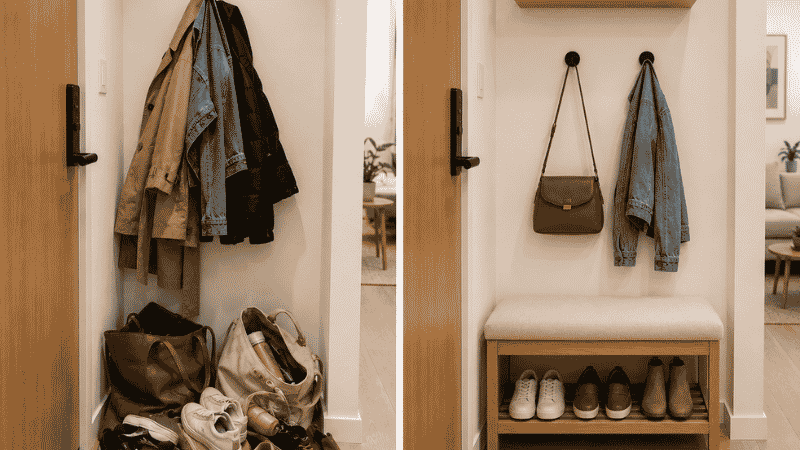
If Your Entryway System Stops Working
The entry system collapses when two things happen: capacity is exceeded (more shoes than the bench holds) or the return-to-place habit doesn’t form (items get deposited but never returned to their assigned spot).
If capacity is the problem: Add a shoe rack under the bench rather than buying a larger bench. A slim 2-tier shoe rack (14 inches deep, 36 inches wide) placed under the bench adds 8–12 pairs of additional storage without changing the bench’s footprint.
If the habit is the problem: The system has too many steps. The entry system should require zero sorting decisions — shoes go under the bench, bag goes on the bench or a hook, coat goes on a hook. If the system requires deciding where things go each time, simplify it until there’s only one possible location for each category.
If You Only Have 10 Minutes: The Immediate Entry Fix
No bench yet? These four things improve the entry today with no furniture purchase:
- Designate a single spot for shoes: A 12-inch square of tape on the floor creates a visual “shoe zone” that trains the deposit habit before any furniture arrives
- Install two Command hooks: At 60–66 inches height, immediately beside the door — one for your daily bag, one for your most-worn coat
- Add a small tray: Any tray (a dinner plate works) placed on whatever surface is nearest the door creates a key and phone landing zone
- Remove everything that isn’t entry-specific: The entry shouldn’t hold anything that doesn’t enter or exit the apartment — mail, umbrella, spare keys yes; random Amazon packages, single socks, and half-used hand cream, no
FAQ: Entryway Storage Bench
What size entryway bench do I need? Measure your entry width and subtract 6 inches for clearance — that’s your maximum bench length. For depth, 14–16 inches works in most apartment entries while maintaining walkway clearance. Height of 17–19 inches is the standard for comfortable shoe-changing seating. In entries under 42 inches wide, a bench under 32 inches long is necessary to leave adequate walkway space.
How many shoes does an entryway storage bench hold? An open-shelf bench holds approximately 1 pair per 8–10 inches of bench length. A 36-inch bench holds 3–4 pairs flat, 5–7 pairs with a two-tier shelf. A 48-inch closed-cabinet bench holds 10–14 pairs across two shelf levels. Count your actual current-season shoe rotation before purchasing — this is the number that determines which bench configuration you need.
What is the best entryway bench for a small apartment? For entries under 42 inches wide: a 24–32-inch bench, 14–16 inches deep, on slim legs (to show floor beneath). For entries 42–60 inches wide: a 36–48-inch bench with either open shelving (if shoe rotation is under 6 pairs) or a closed-cabinet configuration (if over 6 pairs). In both cases, pair the bench with 2–4 wall hooks above and a small shelf or tray for key and small item storage.
Do I need an upholstered or wooden entryway bench? For high-traffic entries or households with children: a wood-top bench is the most practical — wipe clean, no staining, no fabric wear. For entries that are visible from the living room and where aesthetics matter: an upholstered bench in performance fabric or faux leather looks more furniture-like while remaining practical. Avoid light-colored standard fabric in the entry — it stains quickly from outdoor clothing contact.
Can I put an entryway bench in a small apartment with no entryway? Yes — and this is the most common scenario in studio and small one-bedroom apartments where the front door opens directly into the living space. Place a 24–30-inch bench just inside the door, positioned at 90 degrees to the door swing so it doesn’t interfere with opening. This creates a visual and functional entry zone even without a dedicated entryway. The bench back facing the living room acts as a subtle zone boundary.
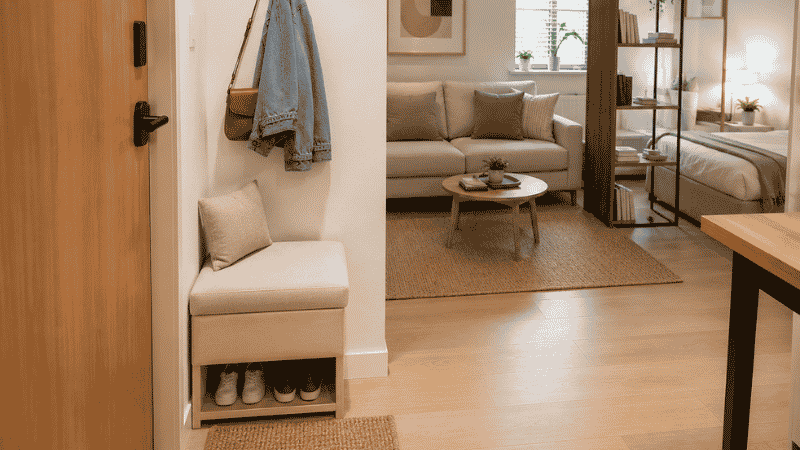
How do I organize an entryway bench? Three zones: (1) bench top surface — for items in active transit (today’s bag, items to take tomorrow, mail to process); (2) bench lower storage — current-season shoes only, not long-term storage; (3) hooks above — daily coats and bags. The bench top should reset to empty (or a single decorative item) every evening. If items accumulate on the bench top and stay there, they’ve found their permanent home — either create a proper storage location for them or accept that the bench is doing the job of a catchall surface.
The Bottom Line
An entryway storage bench is the highest-return furniture purchase for small apartment organization — not because it holds the most, but because the entry is where daily habits form. A bench that provides one place to sit, one place to store shoes, and one defined surface for bags and daily carry items reduces the spread of entry chaos into the rest of the apartment by creating a system that requires zero decisions.
Measure first (entry width, door swing, walkway clearance), then choose the configuration (open shelf, closed cabinet, or cubby) that matches your shoe count, then pair it with two hooks and a small tray. The entry that used to be the apartment’s most chaotic zone becomes the one that’s effortlessly maintained.
For the complete approach to organizing every room in your apartment — not just the entry — our how to organize a small apartment guide covers the room-by-room system and the 5-minute daily reset that keeps it working. And for the complete furniture framework that connects every zone, see our small apartment furniture guide.
References
- Roster, C. A., Ferrari, J. R., & Jurkat, M. P. (2016). The dark side of home: Assessing possession ‘clutter’ on subjective well-being. Journal of Environmental Psychology, 46, 32–41. (Research on clutter’s psychological impact and the role of defined storage zones in reducing entry-to-interior clutter spread)
- American Society of Interior Designers (ASID): Residential space planning guidelines — minimum 36-inch walkway clearance in residential entry and hallway zones; standard seat height recommendations for residential benches and seating (17–19 inches)
- Consumer Product Safety Commission (CPSC): Residential furniture stability guidelines — weight rating and lateral stability requirements for freestanding bench furniture in residential applications
Published on Grainv.com | Category: Storage Furniture | Related: How to Organize a Small Apartment, Small Apartment Furniture, Living Room Storage Ideas