
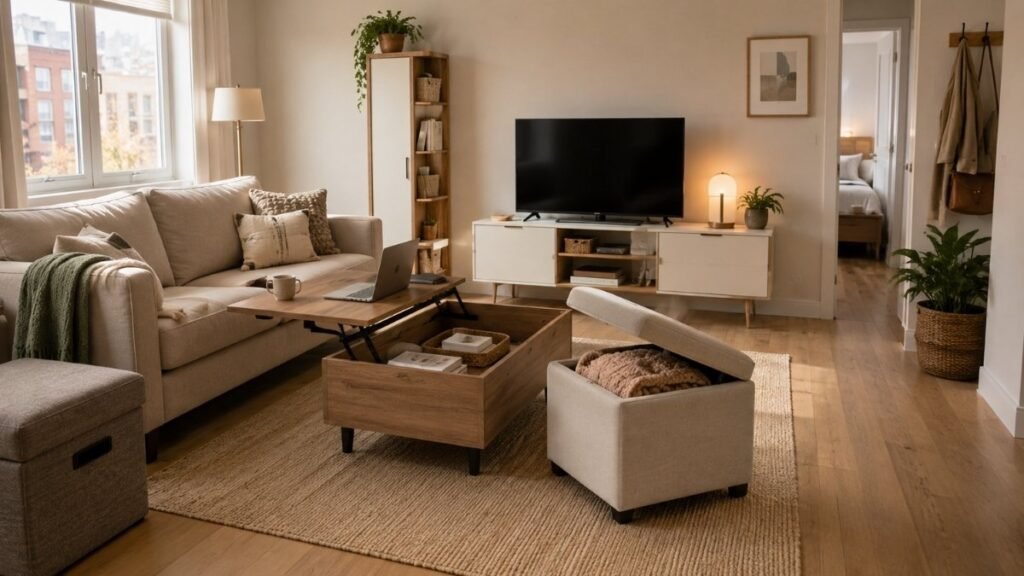
Choosing the right living room storage furniture can completely change how a small living room looks and functions. If your living room feels cluttered no matter how much you tidy up, the furniture is probably the real problem—not the amount of stuff you own. We’ve noticed that in many small apartments, the biggest issue isn’t a lack of storage at all. It’s furniture that doesn’t match how people actually use the room every day. Bulky cabinets eat up valuable walking space, low coffee tables waste the vertical space above them, and pieces that promise “multi-functionality” often end up doing none of their jobs particularly well.
The best living room storage furniture balances storage capacity, footprint, visual weight, and everyday usability—not just how much it can technically hold. This guide will help you figure out what you actually need to store, which furniture types work best for different small-space layouts, how to measure so nothing blocks your walkways, and how to build a setup that fits both your space and your budget. By the end, you’ll have a practical plan for choosing furniture that works in real life instead of another impulse purchase.
Quick Answer: What Storage Furniture Fits Your Living Room
Under 150 sq ft (roughly 15㎡): prioritize a storage ottoman, a compact lift-top coffee table, a tall-legged TV console, and narrow tall cabinets. Every piece needs to do double duty here — there’s no room for anything single-purpose.
150–270 sq ft (roughly 15–25㎡): you have a bit more flexibility to add modular storage units or a sofa console table behind the couch, on top of the essentials above.
Renting: stick to freestanding, easy-to-disassemble furniture. Anything that requires drilling into walls is off the table.
Working from home: a lift-top coffee table earns its keep here, doubling as a laptop desk that hides away when you’re done for the day.
Living with kids or pets: large-capacity storage ottomans and closed TV consoles are worth prioritizing — open shelving tends to become a magnet for toys, chew toys, and general chaos.
Three core principles to keep in mind throughout this guide:
- Use vertical space before floor space
- Keep roughly 80% of storage hidden, 20% on display
- Never sacrifice your main walking path for extra storage
Know What You Need to Store Before Choosing Living Room Storage Furniture
Before comparing coffee tables, TV consoles, or storage ottomans, take a few minutes to identify exactly what needs to be stored. A simple inventory now will make every furniture decision much easier later.
Daily Essentials
Remote controls, chargers, coasters, reading glasses — the small things you reach for constantly need to live somewhere close and easy to access, like a coffee table drawer or an open tray. Burying daily-use items in a hard-to-reach cabinet just means you’ll leave them out on the table anyway.
Bulky Items
Blankets, extra pillows, board games, and seasonal items take up disproportionate space and are used less often. These are exactly what a storage ottoman or a deep cabinet is built for — items you want completely out of sight until you need them.
Decorative Items
Books, plants, framed photos, and a few curated objects are meant to be seen. These belong on open shelving or a console top, not hidden away where they lose their purpose entirely.
Storage Needs Checklist (fill this out before shopping):
- [ ] List your high-frequency items (used daily or almost daily)
- [ ] List your bulky items (blankets, games, seasonal gear)
- [ ] List your decorative/display items
- [ ] List clutter you specifically want hidden from view
What most households are actually missing isn’t more cabinets — it’s a fixed, dedicated spot for each category of item. A common pattern is buying a new storage piece, filling it randomly, and ending up right back where you started within a few weeks because nothing has a consistent “home.” Sorting your items first makes the furniture-buying decision much easier, and it’s worth reading through Living Room Storage Ideas for more on organizing by category before you commit to specific pieces.
5 Rules for Choosing Small Living Room Storage Furniture
The best living room storage furniture isn’t always the biggest or the one with the most features. It’s the furniture that fits your room, your daily habits, and the way you actually use the space. The five rules below can help you avoid expensive mistakes and choose pieces that still work well long after the excitement of buying them wears off.
Rule 1: Use Height Before Width
In a small living room, vertical storage almost always beats horizontal storage, because floor space is the scarcer resource. A tall narrow cabinet that’s 35cm wide and 180cm tall can hold as much as a wide 90cm dresser while using less than half the floor footprint.
Rule 2: Choose Practical Double-Duty Furniture
A lift-top coffee table that becomes a desk, or an ottoman that serves as both seating and storage, delivers real value only if you’ll actually use both functions regularly. If you can’t picture using the second function at least a few times a week, it’s not really double-duty — it’s just one function with extra bulk.
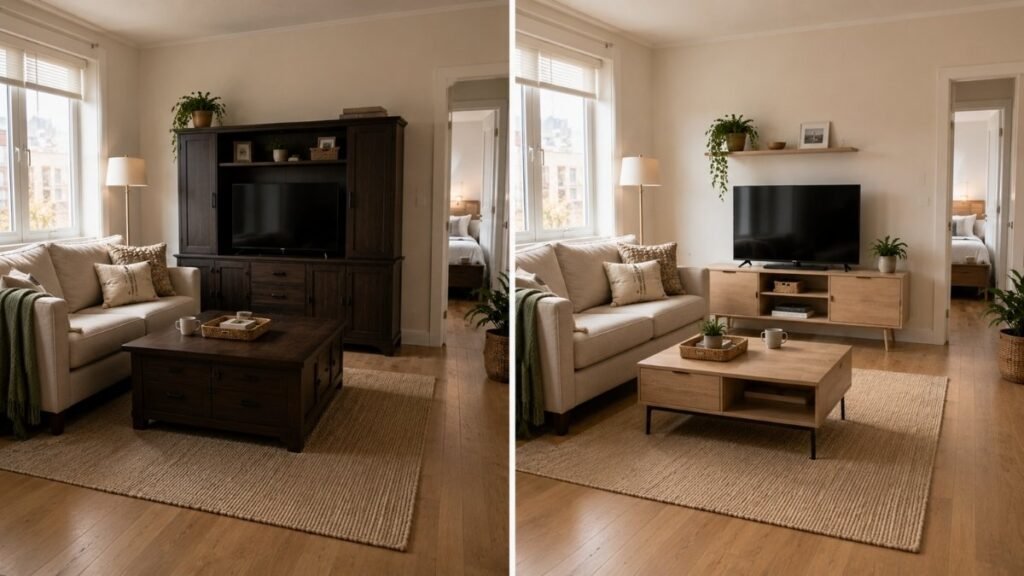
Rule 3: Reduce Visual Weight
Light-colored wood, thin legs, and furniture raised off the floor all make a small room feel less crowded, even when the storage capacity is identical to a bulkier alternative. A dark, heavy cabinet sitting flush against the floor visually “shrinks” a room far more than its actual dimensions suggest.
Rule 4: Hide More Than You Display
Aim for roughly 80% closed storage and 20% open display. Open shelving looks great in photos when it’s carefully styled, but in daily life it tends to fill up with whatever’s lying around, which makes a small room look busier rather than more organized.
Rule 5: Buy Fewer, More Capable Pieces
One well-chosen storage piece that handles multiple needs almost always works better in a small living room than three smaller, single-purpose items. Each additional piece of furniture adds its own footprint and visual clutter, even if its individual storage contribution is small.
Storage Furniture Scorecard
| Criteria | What to Look For |
|---|---|
| Space efficiency | Storage capacity relative to floor footprint |
| Storage capacity | Usable interior volume, not just exterior size |
| Visual weight | Leg height, color, material density |
| Multi-functionality | Realistic, regularly-used secondary function |
| Move-friendliness | Weight, assembly type, disassembly for moving |
| Value for money | Price relative to capacity and durability |
Furniture with complicated transforming mechanisms often ends up permanently stuck in one configuration after the first few uses. A coffee table that converts into a dining table, a desk, and a storage bench sounds appealing on paper, but most people settle into using just one or two of those modes regularly — the extra complexity (and cost) rarely pays for itself. Simpler, well-built designs tend to hold up better over years of actual daily use.
Best Living Room Storage Furniture for Small Spaces
Some are better for hiding everyday clutter, while others make better use of vertical space or serve two purposes at once. Instead of looking for the “perfect” piece, think about how you actually use your living room. The furniture below consistently offers the best balance of storage, space efficiency, and everyday practicality for small homes and apartments.
Lift-Top Coffee Tables
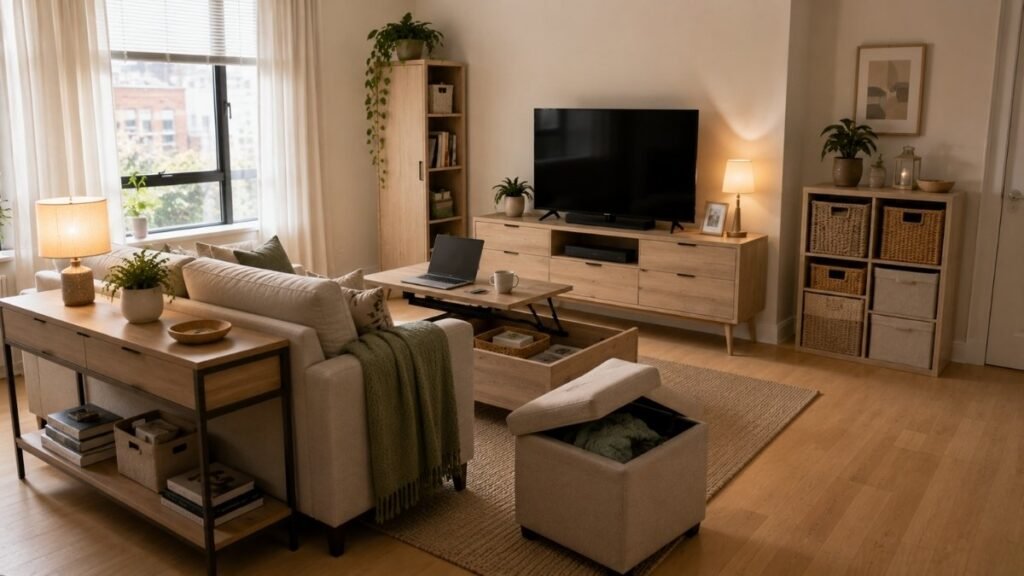
Best for: anyone who works from home, eats in front of the TV, or wants to hide clutter fast before guests arrive. The tabletop lifts to become a laptop or dining surface, while the base hides remotes, cables, or magazines. When shopping, prioritize a smooth, sturdy lift mechanism — a wobbly or stiff hinge is the most common complaint and the hardest thing to fix after purchase.
Storage Ottomans
Best for: blankets, throw pillows, kids’ toys, and anything soft and bulky. An ottoman doubles as extra seating or a footrest, which makes it one of the most space-efficient pieces on this list — you’re getting storage and seating from a single footprint. It’s also a safer option around kids and pets than furniture with hard edges or exposed hardware.
TV Consoles With Storage
Best for: hiding routers, game consoles, and the inevitable tangle of cables behind closed doors. Look for consoles with a mix of drawers and cabinet doors, plus a cable management cutout in the back panel — without it, cords tend to spill out the sides no matter how tidy the front looks.
Tall Narrow Cabinets
Best for: maximizing capacity in a tight footprint, especially in corners or narrow gaps between furniture. A cabinet that’s tall and shallow (30-40cm deep) uses vertical space that would otherwise sit empty, and takes up significantly less floor area than a wide, low dresser with equivalent capacity.
Sofa Console Tables
Best for: the dead space behind a sofa that’s positioned away from the wall. A narrow console (typically 20-30cm deep) fits perfectly in that gap and gives you a spot for a lamp, charging station, or daily-use items without adding a separate side table.
Modular Storage Units
Best for: renters and anyone on a tighter budget who wants to expand storage gradually. These units can be added to piece by piece and reconfigured or disassembled easily, which makes them especially practical if you expect to move within the next year or two.
Furniture Type Comparison
| Type | Floor Footprint | Storage Capacity | Visual Weight | Best For | Budget Level |
|---|---|---|---|---|---|
| Lift-top coffee table | Medium | Medium | Medium | WFH, dining, quick hide-away | Mid |
| Storage ottoman | Small | Medium | Low | Kids/pets, soft items, extra seating | Low-Mid |
| TV console with storage | Large | High | Medium-High | Electronics, cable management | Mid-High |
| Tall narrow cabinet | Small | High | Medium | Corners, vertical maximization | Mid |
| Sofa console table | Small | Low-Medium | Low | Behind-sofa dead space | Low |
| Modular storage unit | Varies | Varies | Low-Medium | Renters, gradual budget building | Low-Mid |
Compare how much storage each piece delivers per square meter of floor space it occupies. A large TV console might hold more overall, but a tall narrow cabinet often delivers more storage per square foot of floor it actually takes up, which is the number that matters most in a tight living room. If you’re specifically weighing TV storage options, it’s also worth comparing a floating media console against a traditional floor-standing one — mounting the console on the wall frees up the floor beneath it entirely.
How to Measure Your Living Room Before Buying Storage Furniture
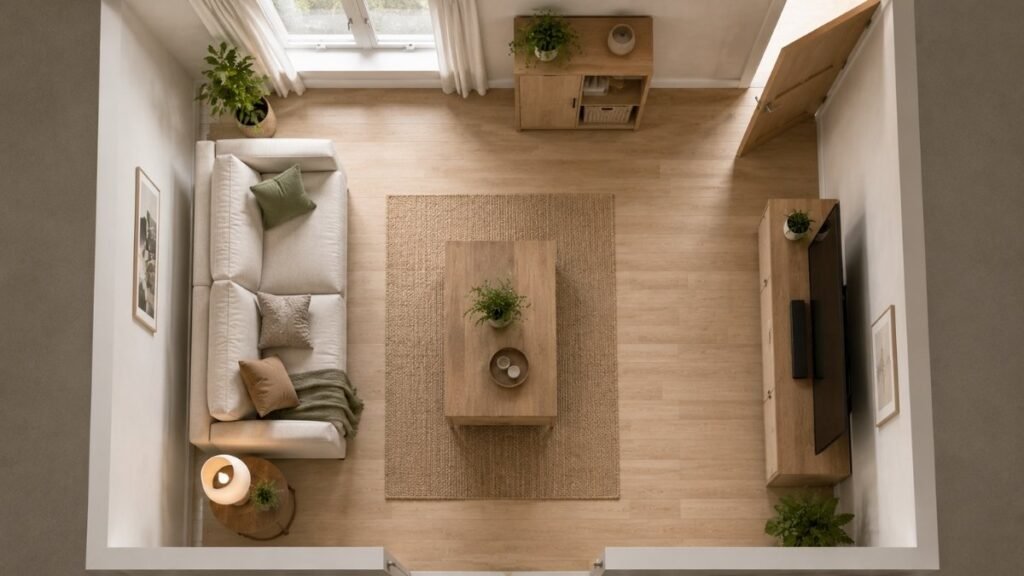
We’ve seen compact-looking TV consoles block walkways and coffee tables that looked perfectly sized online end up dominating a small space. Before buying living room storage furniture, spend a few minutes measuring not only where the furniture will sit, but also how you’ll move around it every day. Good clearance is what makes a room feel comfortable—not simply fitting everything inside it.
Walking Space
Your main walking path through the living room should stay at least 60cm wide, and ideally closer to 90cm if the room doubles as a walkway to another space, like a kitchen or hallway. Anything narrower starts to feel like squeezing past furniture rather than moving through a room.
Clearance Around Furniture
Beyond the sofa-to-coffee-table gap, remember to leave enough room for cabinet doors and drawers to open fully — a beautiful storage piece is much less useful if you have to shove the sofa aside every time you want to open it. Check both the swing radius of doors and the full pull-out length of drawers before finalizing placement.
Measure Before Ordering
Measure your front door, any hallway turns, and your elevator (if applicable) before buying anything large — a piece that won’t fit through the doorway is a returns headache nobody wants to deal with. It also helps to measure the delivery path width at its narrowest point, not just the widest.
Living Room Furniture Dimension Reference
| Measurement | Recommended Range |
|---|---|
| Sofa to coffee table | 35-45cm |
| Main walkway width | 60-90cm |
| Coffee table height (vs. sofa seat) | Within 5cm of sofa seat height |
| Cabinet door swing clearance | Add 40-50cm in front of the cabinet |
| Drawer pull-out clearance | Add full drawer depth, typically 35-45cm |
Pre-Purchase Measuring Checklist:
- [ ] Main walkway width
- [ ] Furniture footprint (length x width)
- [ ] Door/drawer opening clearance
- [ ] Outlet placement (for TV consoles, lamps)
- [ ] Delivery path dimensions (doorway, hallway, elevator)
A simple trick that works surprisingly well: tape out the furniture’s footprint on the floor with painter’s tape and live with it for a day before buying. Walking around the taped outline for a full day, including normal routines like vacuuming or setting up for guests, tends to reveal clearance problems that measurements alone can miss. For a more complete approach to arranging everything in the room together, see this Living Room Storage Ideas guide.
Should You Choose Open Shelving or Closed Cabinets?
It’s easy to fall in love with beautifully styled open shelves in photos, but everyday life usually tells a different story. We’ve seen plenty of small living rooms where open shelving gradually turned into a catch-all for chargers, paperwork, toys, and everything else without a proper home. Closed cabinets aren’t always the prettier option, but they’re often what keeps a small space looking calm and organized. The key isn’t choosing one over the other—it’s knowing where each works best.
Open Shelving vs Closed Cabinets Comparison
| Factor | Open Shelving | Closed Cabinets |
|---|---|---|
| Visual appeal | High, if kept minimal and styled | Neutral, consistent |
| Storage capacity | Lower, limited by what looks good | Higher, no visual constraints |
| Cleaning difficulty | Higher, dust accumulates on exposed items | Lower, contents protected |
| Small-space suitability | Best in small doses | Best as the primary storage method |
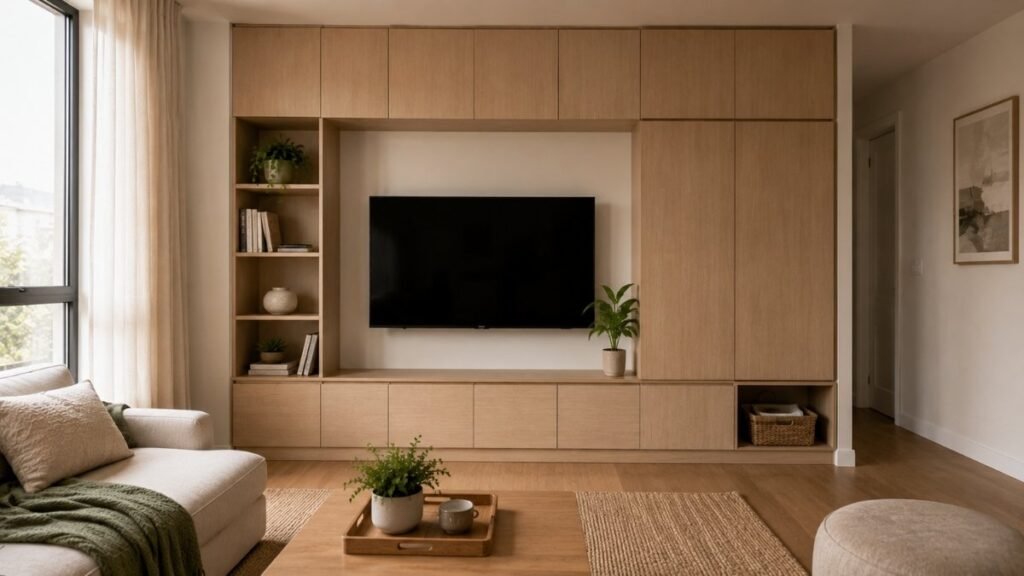
Open shelving works well for a handful of books, a plant, and one or two personal objects — items you’d genuinely want a guest to notice. The moment it becomes a catch-all for daily clutter, though, it stops looking curated and starts looking messy, and there’s no door to close over it when you’re short on time.
Once open shelving fills up with everyday items, it tends to make the whole room look more chaotic, not more organized. This is one of the more common regrets people report after opting for all-open storage in a small living room — it photographed beautifully empty, but daily life filled it with exactly the kind of visual noise a small space can’t absorb. Keeping deliberate empty space on open shelves, rather than filling every inch, is what keeps them looking intentional. For styling tips on getting this balance right, a dedicated open-shelf styling guide can help you avoid overfilling them.
Storage Furniture Ideas for Renters
Shopping for storage furniture is a little different when you’re renting. A piece that works perfectly in a forever home may not make sense if it requires drilling into walls or is difficult to move. We’ve noticed that the furniture renters end up keeping the longest is usually the simplest—freestanding, easy to take apart, and flexible enough to fit the next apartment as well. Choosing with your next move in mind often saves both money and frustration later.
Freestanding Furniture
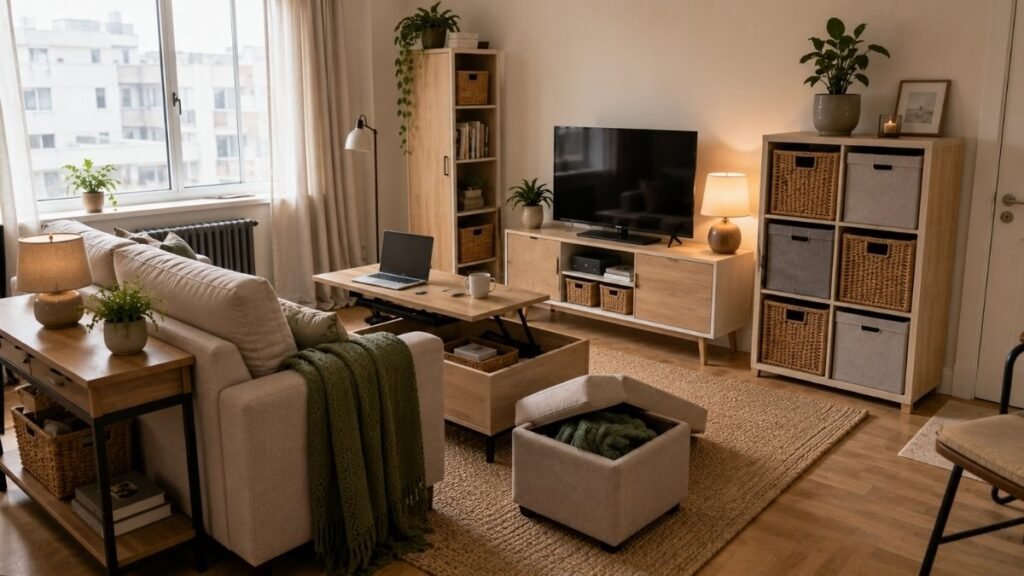
Tall cabinets and bookshelves that lean against a wall (rather than being mounted to it) provide vertical storage without any installation. Look specifically for pieces with anti-tip straps that attach to furniture rather than drywall, since some anti-tip kits still require anchoring into the wall.
Modular Storage
Cube storage systems and modular shelving units can be added to over time and reconfigured as your needs or living space changes. This flexibility also makes them easier to break down and reassemble if you move, compared to a single large fixed piece.
Easy-to-Move Furniture
Lighter-weight pieces with simple assembly (screws and cam locks rather than glued joints) hold up much better to the wear of moving day. Furniture designed for flat-pack assembly is often specifically built to be disassembled again, which matters more than people expect until their next move.
Renter Furniture Checklist:
- [ ] Can it be disassembled for a future move?
- [ ] Does it avoid requiring wall anchors or drilling?
- [ ] Is it manageable to carry and move without professional help?
Furniture you can reuse in your next apartment is almost always a better investment than something custom-built for your current one. Custom or built-in storage solutions might look seamless, but they typically can’t move with you, which means starting from scratch again at your next address. Prioritizing modular, freestanding pieces protects that investment across multiple moves.
How to Tell If Storage Furniture Will Last
Good storage furniture isn’t always the most expensive piece in the showroom. In fact, we’ve found that many problems don’t appear until months after delivery, when drawers begin sticking, hinges loosen, or shelves start to sag under everyday use. Spending a few extra minutes checking the construction before you buy can save you from replacing the entire piece much sooner than expected. The details below are worth looking at before making your final decision.
Inspect the lift or hinge mechanism on any lift-top or flip-up furniture for smooth, controlled movement — a mechanism that feels stiff or drops suddenly in the showroom will only get worse with regular use. Drawer slides should glide without wobbling side to side, and full-extension slides (which let the drawer pull all the way out) tend to outlast basic slides that only open partway. Check the edge banding on particleboard or MDF pieces, since peeling or poorly sealed edges are one of the most common early failure points, especially in humid climates. Always check the stated weight capacity, particularly for shelves and drawers that will hold books or heavier items.
Durability Checklist:
- [ ] Lift/hinge mechanism moves smoothly and holds position
- [ ] Drawers slide evenly without wobbling
- [ ] Hardware feels solid, not loose or flimsy
- [ ] Weight capacity is clearly stated and matches intended use
Hardware quality tends to matter more for how long furniture lasts than the finish or overall design does. Two pieces can look nearly identical in photos, but the one with cheap plastic drawer slides will likely need replacing within a year or two, while the one with metal ball-bearing slides can outlast several apartments. This gap is especially noticeable on pieces used daily, like TV consoles and lift-top coffee tables, where the moving parts see constant wear.
Recommended Storage Furniture Setups for Different Living Rooms
We’ve found that starting with one or two well-chosen storage pieces—and adding more only when you genuinely need them—usually creates a more functional room than trying to furnish everything at once. The examples below can help you choose a setup that matches both your space and your budget.
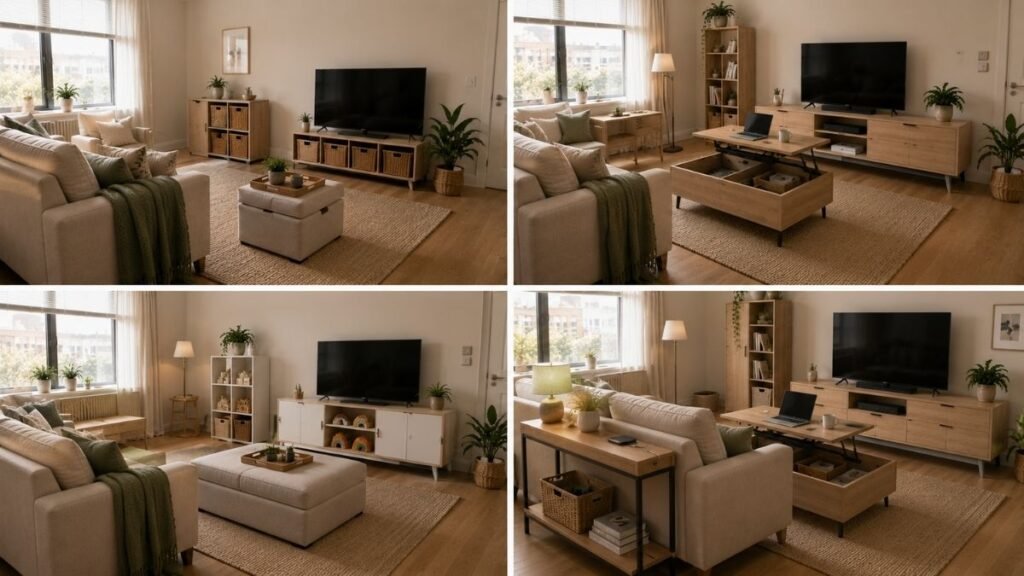
Budget Setup
- Storage ottoman
- Small side cabinet
- A few labeled storage bins
Apartment Setup
- Lift-top coffee table
- Tall-legged TV console
Family Setup
- Large-capacity storage ottoman
- Closed TV console (kid- and pet-proof)
Work-from-Home Setup
- Lift-top coffee table (doubles as a desk)
- Sofa console table (extra surface + charging station)
Buying order matters: start with your one main storage piece — usually a TV console or coffee table — and add smaller pieces gradually as you identify what’s actually still missing.
Budget Setup Comparison
| Setup | Core Pieces | Best For |
|---|---|---|
| Budget | Ottoman + small cabinet + bins | Tight budgets, first apartments |
| Apartment | Lift-top table + tall TV console | Standard studio/1BR layouts |
| Family | Large ottoman + closed console | Homes with kids or pets |
| Work-from-home | Lift-top table + sofa console | Remote workers needing flex space |
Buying everything at once rarely works out as well as adding pieces gradually based on real experience living in the space. It’s common to plan out a complete furniture list on paper, only to realize after a few weeks that one “essential” piece barely gets used while something unplanned turns out to be genuinely necessary. Starting with a single strong main piece and adjusting from there tends to produce a better final result than committing to a full setup on day one.
FAQ
What are the best double-duty storage furniture pieces for a small living room?
Lift-top coffee tables and storage ottomans are the two strongest options, since both combine a function you already need (a table surface or extra seating) with genuine storage capacity. Choose based on which secondary function you’ll actually use — a table surface for work or dining, or extra seating for guests.
How do I add living room storage without making the space look cluttered or cramped?
Stick to the 80/20 rule: keep about 80% of your storage closed and hidden, with only a small, curated portion on open display. Also prioritize tall, narrow pieces over wide, low ones, and choose furniture with visible legs to keep the floor line open.
Is a lift-top coffee table actually worth it for a small apartment living room?
It’s worth it if you’ll genuinely use the raised surface regularly, whether for working from home, eating, or quickly hiding clutter. If you rarely need a raised work surface, a simpler storage ottoman or a coffee table with just a shelf underneath may serve you better for less money.
How can renters maximize vertical living room storage without damaging walls?
Freestanding tall cabinets and bookshelves provide vertical storage without any wall mounting, and pairing them with furniture-anchored anti-tip straps (rather than wall-anchored ones) keeps them stable and lease-friendly. Modular cube storage is another good option since it can be reconfigured or taken apart entirely when you move.
How do I hide everyday clutter like blankets, toys, and cables in the living room?
Storage ottomans handle soft bulky items like blankets and toys well, while a TV console with a cable management cutout keeps cords and electronics out of sight. Assign each category of clutter its own dedicated spot rather than piling everything into a single catch-all bin.
Should I choose open shelving or closed cabinets for small-space storage?
Closed cabinets should handle the majority of your storage, with open shelving reserved for a small number of items you actually want on display. A rough 80/20 split toward closed storage keeps a small living room looking organized rather than visually busy.
How can I use a storage ottoman as both extra seating and clutter control?
Choose an ottoman sturdy enough to sit on comfortably, then use the interior specifically for soft, bulky items like blankets, throw pillows, or toys that don’t need frequent access. Placing it near the sofa lets it double as a footrest, extra seat for guests, and a coffee table surface all at once.
What budget-friendly storage options work best for small living room layouts?
A storage ottoman paired with a small side cabinet and a few labeled bins covers most storage needs at a low cost. Modular storage units are also budget-friendly since you can start with one or two pieces and expand only as your budget and needs grow.
🏠 Behind This Guide
Finding the right living room storage furniture isn’t about squeezing more cabinets into a small room—it’s about creating a space that feels easier to live in every day.
That’s why this guide focuses on the decisions that matter most, from choosing furniture that fits your layout to making better use of vertical space, maintaining comfortable walkways, and selecting pieces that will still work after your needs change or your next move.
Everything here is based on established small-space design principles, trusted home furnishing resources, and the questions people ask most often when trying to make a small living room feel less cluttered and more functional. Our goal was simple: turn scattered advice into one practical guide that’s easy to follow and even easier to apply.
Because the best living room storage furniture doesn’t just store your belongings—it gives your home a little more breathing room.
🏡 Continue Improving Your Small Living Room
Creating a functional small living room doesn’t stop with choosing the right storage furniture. These guides will help you make better furniture decisions, maximize every square foot, and build a space that’s both practical and comfortable.
- Ottoman Coffee Table — Discover how a storage ottoman and a coffee table compare, and learn which option works best for your space and daily routine.
- Small Living Room Design — Explore practical layout ideas, furniture placement tips, and design strategies that make compact living rooms feel more open.
- Floating Corner Shelf — Learn how to use overlooked corner space for extra storage and display without taking up valuable floor area.
- Furniture Ideas for Small Living Room — Browse space-saving furniture ideas that combine comfort, storage, and style for apartments and other compact homes.
❤️ A Final Note
A small home should never feel limiting. With the right furniture, thoughtful layouts, and a few smart storage choices, even the smallest spaces can become comfortable, organized, and inviting.
At Grainv, we focus on practical furniture recommendations and space-saving ideas designed for real homes, real budgets, and everyday living. Every guide is created to help you make informed buying decisions, avoid costly mistakes, and get more value from every square foot.
Our goal is simple: to help you create a home that feels bigger, works smarter, and reflects the way you truly live.