
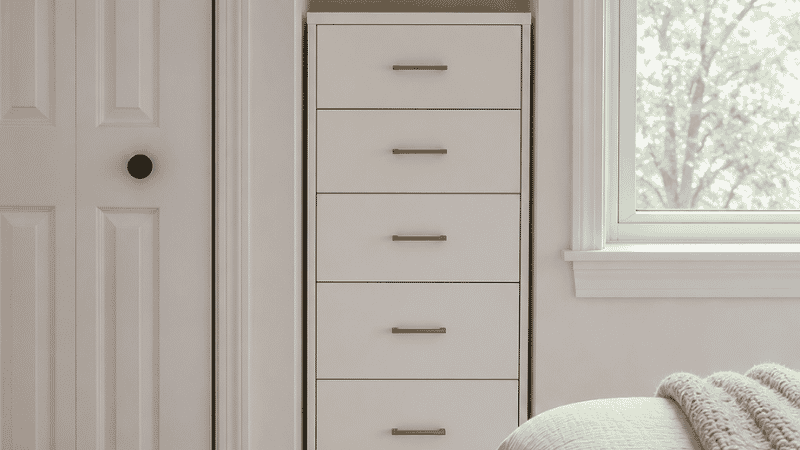
You measured the only available wall in your bedroom. It’s 28 inches wide — the gap between the closet door frame and the window trim. You’ve been staring at it for two weeks trying to figure out if a dresser can fit there, what kind, and whether it would even hold enough to be worth the floor space.
This is the narrow dresser problem in its purest form: not just finding a dresser that’s physically narrow enough, but figuring out whether it can do enough work to justify its presence. A dresser that fits in 28 inches but only holds six t-shirts isn’t solving your storage problem — it’s giving it a wooden frame.
This guide answers the practical questions: what dimensions define a narrow dresser, how to calculate whether one can actually replace your existing storage, the difference between a narrow dresser and a chest of drawers (and which one you actually need), and what to look for in the specific features that separate a useful narrow dresser from one that frustrates you every morning.
Key Takeaways
- A narrow dresser is typically 24–36 inches wide: Under 24 inches is considered “slim” or “skinny”; over 36 inches transitions into standard dresser territory — the sweet spot for most small bedrooms is 28–32 inches
- Depth matters more than width in small bedrooms: A dresser 20+ inches deep creates a walkway problem when drawers open; 16–18 inches deep is the maximum for comfortable daily use in rooms with limited side clearance
- Tall narrow dressers store more per square foot of floor space: A 47-inch-tall narrow dresser with 5 drawers holds significantly more than a 30-inch-tall wide dresser with 6 drawers, while consuming a smaller floor footprint
- Dresser vs chest of drawers is mostly a height distinction: A dresser is typically 28–36 inches tall (low profile); a chest of drawers is 40–60 inches tall (vertical). Both can be narrow — the choice depends on your ceiling height and whether you want a surface at waist height
- The drawer depth test: Each drawer in a narrow dresser should be at least 14 inches deep to hold folded clothing flat; anything shallower forces vertical rolling, which works but requires habit adjustment
What Makes a Dresser “Narrow”?
There’s no industry standard for what counts as narrow, which is part of why shopping for one is frustrating. A dresser labeled “narrow” by one brand might be labeled “standard” by another. Here’s a practical working definition:
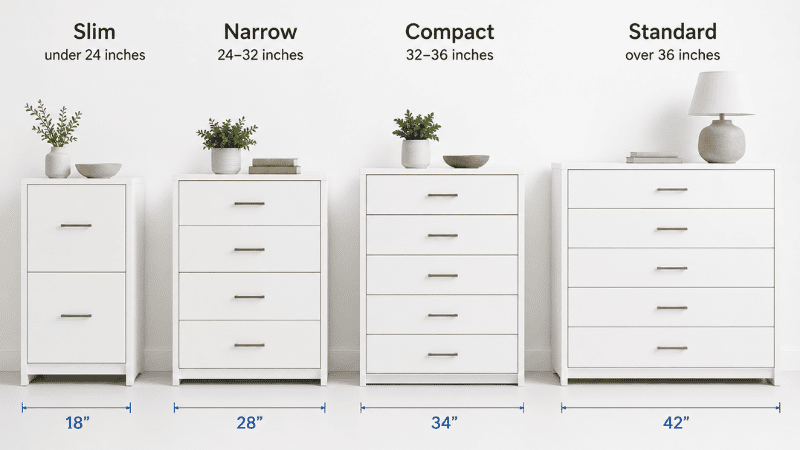
Under 24 inches wide: Slim or skinny dresser. Very limited capacity — typically 2–3 drawers, useful for supplemental storage or a specific category (socks and underwear, for example) but not as a primary clothing storage solution.
24–32 inches wide: True narrow dresser. This is the range most small bedroom shoppers need. Holds 4–6 drawers of meaningful capacity while fitting in gaps, alcoves, and beside-closet spaces that standard dressers can’t.
32–36 inches wide: Compact dresser. These are often marketed as “narrow” but sit at the lower end of standard dresser width. Still space-efficient compared to 40–48-inch standard dressers, but check your specific wall measurement before assuming they fit.
Over 36 inches wide: Standard dresser. These are not narrow, regardless of marketing copy.
When shopping, filter by width first and verify the actual dimension in the spec sheet — never trust the category label alone.
Narrow Dresser Dimensions: The Three Numbers That Matter
Before choosing a style or price range, measure your available space and understand how dresser dimensions interact with it.
Width: Your Non-Negotiable Constraint
Measure the wall space where the dresser will go at three heights: at the floor (where the dresser base sits), at approximately 30 inches (mid-dresser), and at approximately 50 inches (where the top extends). Walls aren’t always perfectly plumb, and a gap that’s 29 inches at the floor might be 27 inches at 50 inches due to door frames, molding, or slight wall angles.
Your measured minimum is your hard cap. Don’t buy a dresser within 1 inch of the gap — leave at least 2 inches of clearance on each side for installation and air circulation.
Common narrow dresser widths to know:
- 15–16 inches: IKEA NORDLI / STORKLINTA range — very slim, fits tiny alcoves
- 18–20 inches: Slim nightstand-width dressers, usually 2–3 drawers
- 24 inches: Entry-level narrow — 4 drawers, meaningful storage
- 28–30 inches: Practical narrow — 5–6 drawers, primary storage capable
- 32–34 inches: Compact-narrow crossover — highest storage capacity in the narrow category
Depth: The Dimension That Affects Your Walkway Every Day
Dresser depth is the measurement from the front of the dresser (when the drawers are closed) to the back. This is not the same as drawer depth — the dresser frame adds 2–4 inches beyond the drawer depth.
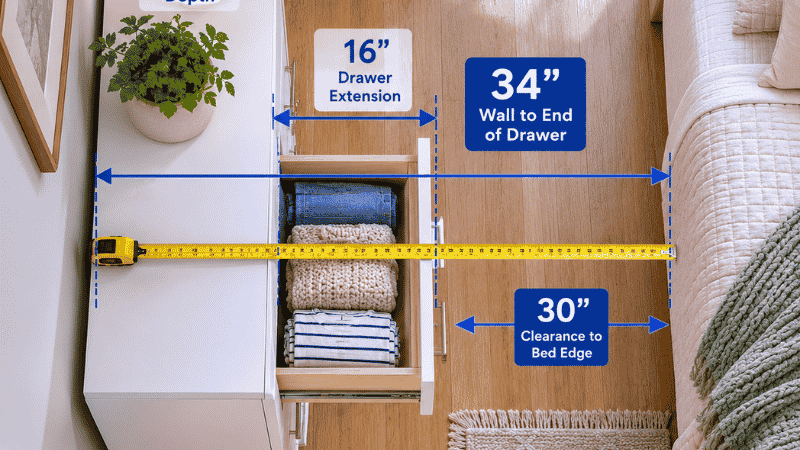
Why depth matters more than most people realize: When a dresser drawer opens, it extends the dresser’s effective depth by another 16–20 inches. A dresser that’s 18 inches deep with a 16-inch drawer open extends 34–36 inches from the wall. In a 10-foot-wide bedroom where the dresser faces the bed, that open drawer reaches 34 inches into the room — which is the same as the depth of a standard sofa.
Recommended dresser depth for small bedrooms:
- 14–16 inches deep: Slim profile, drawer depth approximately 12–13 inches — works for folded items rolled vertically (KonMari style)
- 16–18 inches deep: Standard narrow dresser depth, drawer depth approximately 14–15 inches — accommodates folded clothing flat
- 18–20 inches deep: Maximum comfortable depth for rooms with less than 36 inches of side clearance when drawers are open
- Over 20 inches deep: This is a standard dresser depth — not recommended for rooms where the dresser is beside a bed or in a tight walkway
The 18-inch deep dresser rule: A dresser 18 inches deep or less is the maximum for maintaining a comfortable walkway in most small bedrooms. Check this spec as carefully as the width.
Height: Tall Narrow vs Short Wide
This is the decision most people don’t think through until they’ve already bought the wrong thing.
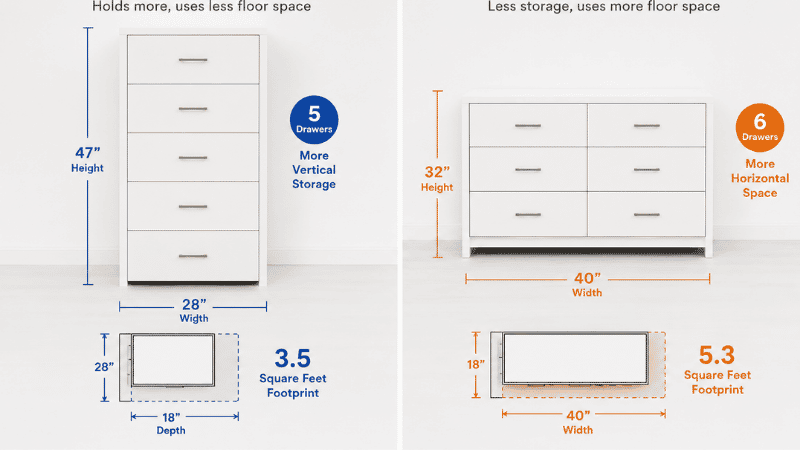
Tall narrow dresser (40–55 inches tall, 24–30 inches wide): More total drawer volume per square foot of floor space. The same 4.5 square feet of floor space that a short dresser occupies can hold 6–8 drawers when the dresser is tall rather than wide. The trade-off: the top surface is less useful as a surface (too high for most people to set things on comfortably), and the dresser can look visually top-heavy in a room with 8-foot ceilings.
Short wide dresser (28–34 inches tall, 32–40 inches wide): Lower profile keeps sightlines open and the top functions as a natural surface for a lamp, mirror, or tray. But it requires more wall width — which is precisely what most small bedrooms don’t have.
For small bedrooms specifically: A tall narrow dresser almost always provides better storage-per-floor-footprint than a short wide dresser. The only exception is when ceiling height is under 8 feet and a 55-inch-tall dresser would feel disproportionate, or when the available wall space is wide enough to accommodate a shorter option.
Dresser vs Chest of Drawers: What’s the Actual Difference?
This is one of the most commonly searched questions in this category — and it has a straightforward answer that most furniture guides don’t give cleanly.
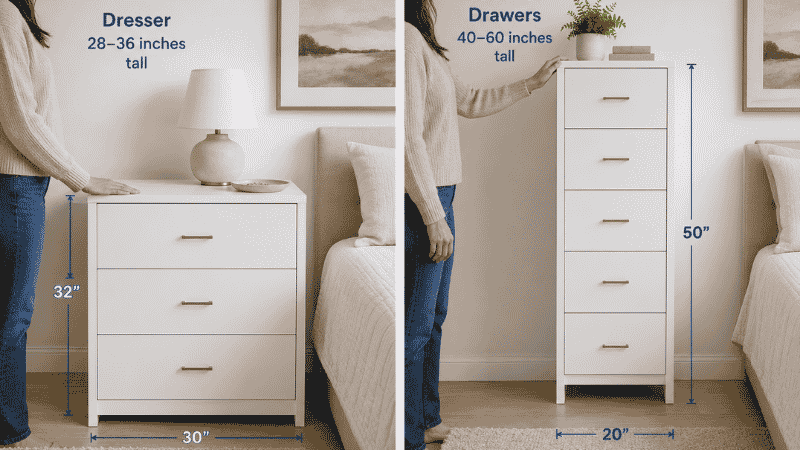
The practical distinction is height and surface use:
A dresser is typically 28–36 inches tall. At this height, the top surface sits at approximately waist level and functions naturally as a surface — for a lamp, a mirror, a tray, or a monitor. Dressers are often paired with a mirror hung above them. They can be narrow (28–32 inches wide) or standard (36–48 inches wide).
A chest of drawers (also called a chest) is typically 40–60 inches tall. At this height, the top is above waist level and less useful as a general surface, but the vertical configuration packs significantly more drawer space into a smaller floor footprint. The narrowest chests of drawers (15–20 inches wide) are often described as “slim chests” and are the best option when the available wall space is extremely limited.
For small bedrooms: chest of drawers usually wins
In a bedroom where floor space is the constraint, a chest of drawers stores more clothing per square foot of floor space than a standard dresser. The trade-off is losing the waist-height surface — but if you’re tight on space, a floating shelf or wall-mounted mirror handles that function without any floor cost.
When a dresser is the better choice: When you specifically want a waist-height surface (for a mirror, lamp, or daily-use items), when the room has lower ceilings where a tall chest would feel overwhelming, or when you want the dresser to function as a nightstand at a low-to-mid height.
Narrow Dresser for Small Bedroom: Placement Strategies
Where you place the narrow dresser determines whether it works in the room or just technically fits.
The Gap Beside the Closet
The most common placement for a narrow dresser in a small bedroom is the gap between the closet door frame and the nearest wall or window. This location is ideal because it uses space that’s already functionally constrained — the closet door swing limits what can go there anyway, so a slim dresser fits without competing with other furniture.
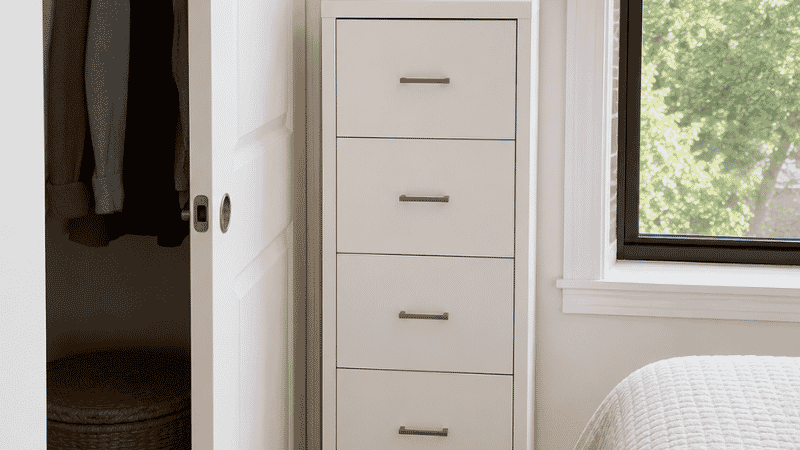
What to check: The closet door needs clearance to open fully without hitting the dresser. Standard closet doors swing 24 inches into the room. Measure from the door frame to the dresser’s planned position and verify the door can open to at least 90 degrees without obstruction.
Beside the Bed (Nightstand Replacement)
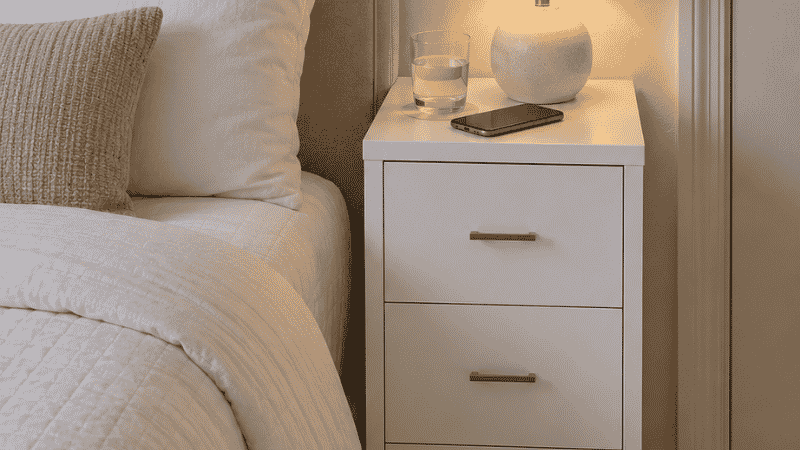
A narrow dresser 18–22 inches wide and 28–34 inches tall can replace a nightstand while adding significant drawer storage. The top surface functions as a nightstand surface (phone charger, lamp, water glass) and the drawers hold what would otherwise go in a separate dresser.
What to look for: Height should be within 2–3 inches of your mattress top height (typically 24–26 inches from the floor for a platform bed with mattress). A dresser that’s 28–32 inches tall works well beside most platform beds. Drawer access should be from the side facing the room, not the wall side.
Facing the Foot of the Bed
In bedrooms where both side walls are tight, placing the narrow dresser at the foot of the bed uses the room’s “third wall” — the short wall facing the bed. A dresser 28–32 inches wide centered at the foot of a queen bed (60 inches wide) leaves 14 inches of clearance on each side, which is enough for passage if the dresser isn’t too deep.
Critical constraint: The dresser depth determines whether drawers can open at the foot of the bed without hitting the mattress. Measure from the dresser’s planned position to the edge of the mattress — you need at least 18–20 inches of clearance for comfortable drawer access.
What to Look for When Buying a Narrow Dresser
Drawer Slide Quality
The narrow dresser drawer slide issue is the same as any dresser — and just as important. Full-extension ball-bearing slides let you access the full drawer depth. Partial-extension slides leave the back 20–25% of the drawer inaccessible without moving items. On a narrow dresser where each drawer is already shallower than a standard dresser, partial extension is a meaningful functional loss.
Look for: Full-extension slides, soft-close mechanism, weight rating of at least 30 lbs per drawer.
Anti-Tip Safety
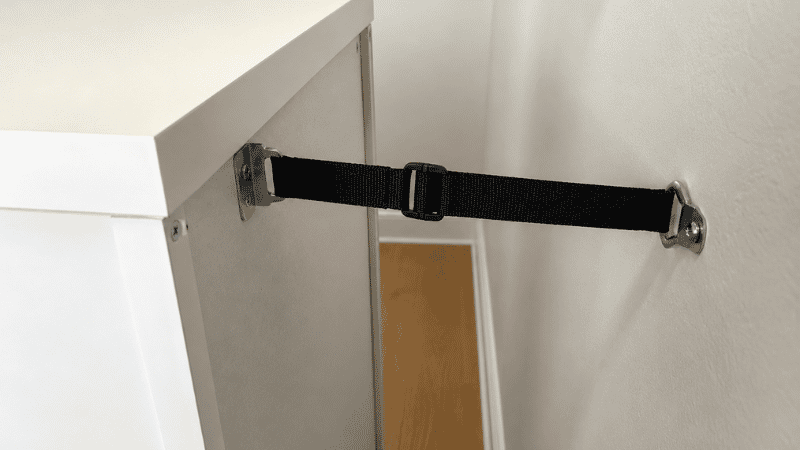
Tall narrow dressers have a higher center of gravity than short wide ones, which means they’re more prone to tipping — particularly in households with children. The US Consumer Product Safety Commission reports that furniture tip-overs cause approximately 22,000 emergency room visits annually, with children under 6 being the most at-risk group.
What to look for: Wall anchor kit included (most quality dressers include one), anti-tip strap or bracket compatible with the dresser’s back panel, and a back panel made of solid material (not open frame) that can accept anchor hardware.
Frame Material and Stability
Narrow dressers flex more than wide ones when drawers are loaded — the narrower frame has less lateral stability. Solid wood frames maintain rigidity better than MDF or particleboard over time. If budget requires MDF, look for thicker panels (18mm minimum) and corner block reinforcement at drawer openings.
Drawer Depth vs Interior Storage
This is where spec sheets mislead people. A dresser listed as 15 inches deep might have only 12–13 inches of usable drawer depth after the frame and drawer front subtract from the interior measurement. Ask for or look for the interior drawer depth specification, not just the overall dresser depth.
Minimum useful interior drawer depth for folded clothing: 14 inches. Below this, most folded clothing categories require vertical rolling rather than flat folding.
Narrow Dresser vs Platform Bed with Drawers: Which Gives You More Storage?
If you’re deciding between a narrow dresser and a storage bed as your primary bedroom storage, here’s the honest comparison:
Narrow dresser (28-inch wide, 47-inch tall, 5 drawers):
- Floor footprint: approximately 28 × 18 inches = 3.5 sq ft
- Total storage volume: approximately 5 drawers × (24W × 14D × 7H inches) = 11,760 cubic inches
Platform bed with 4 drawers (queen):
- Additional floor footprint: zero (uses existing bed footprint)
- Total storage volume: approximately 4 drawers × (29W × 17D × 6H inches) = 11,832 cubic inches
The verdict: Nearly identical storage volume, but the platform bed delivers it at zero additional floor cost. The narrow dresser wins only when you need a surface at a specific height (a mirror ledge, a lamp, a monitor position) or when the bedroom doesn’t have a bed upgrade in the budget.
If you haven’t already considered a platform bed with storage drawers, our guide to platform beds with drawers covers the drawer capacity math and which rooms they work in.
If Your Narrow Dresser Drawers Feel Stiff or Misaligned
Two fixes handle the vast majority of narrow dresser drawer problems:
Wax the runners: A block of paraffin or beeswax rubbed along the wooden slide surfaces dramatically reduces friction. Takes two minutes, lasts several months. This works for both wooden runners and ball-bearing slides that have developed slight stiffness.
Check for overloading: Each drawer has a rated weight capacity. Narrow dresser drawers are typically rated for 25–40 lbs per drawer depending on slide quality. If a drawer is dragging against its tracks, weigh what’s inside — if it exceeds the rating, redistribute heavier items to lower drawers (closer to the floor = lower center of gravity and less frame stress).
FAQ: Narrow Dresser Questions
What is considered a narrow dresser? A narrow dresser is generally defined as 24–36 inches wide. Under 24 inches is typically called “slim” or “skinny”; over 36 inches transitions into standard dresser territory. The term isn’t standardized across brands, so always check the actual width measurement in the spec sheet rather than relying on the product category label.
What is the difference between a dresser and a chest of drawers? The primary difference is height. A dresser is typically 28–36 inches tall, with a top surface at approximately waist height — useful for a lamp, mirror, or tray. A chest of drawers is typically 40–60 inches tall, storing more in a smaller floor footprint but with a less useful top surface. Both can be narrow. For small bedrooms where floor space is the constraint, a chest of drawers usually stores more clothing per square foot.
How deep should a dresser be for a small bedroom? Maximum 18 inches deep for comfortable daily use in most small bedrooms. At 18 inches deep, a drawer with 14–15 inches of interior depth accommodates folded clothing flat. Deeper dressers (20+ inches) create walkway problems when drawers are open in rooms with limited side clearance. The 18-inch-deep dresser is the practical upper limit for bedrooms under 120 square feet.
What is the best dresser for a small bedroom? A tall narrow dresser (28–32 inches wide, 40–50 inches tall, 16–18 inches deep) provides the best storage-per-floor-footprint for small bedrooms. The vertical configuration maximizes drawer count without expanding the floor footprint. For rooms where height is a concern, a 24–28-inch-wide compact dresser at 36–42 inches tall balances capacity with proportion.
How wide is a narrow dresser? True narrow dressers range from 24–32 inches wide. IKEA’s narrow dresser range runs 15.75–21.25 inches wide (their “slim” category). Most furniture brands label dressers 24–34 inches wide as “narrow.” Always verify the exact width in the spec sheet for your specific wall space measurement.
Can a narrow dresser replace a standard dresser? For one person with a moderate wardrobe: yes, usually. A 28–32-inch narrow dresser with 5–6 drawers holds approximately the same volume as a standard 6-drawer dresser, with shallower individual drawers requiring more deliberate folding. For two people sharing a bedroom: a narrow dresser typically handles one person’s clothing categories, requiring a supplemental storage solution (platform bed with drawers, wardrobe, or a second narrow dresser) for the other.
Where should I put a narrow dresser in a small bedroom? Three positions work well: (1) the gap beside the closet door frame — using constrained space that can’t hold other furniture; (2) beside the bed as a nightstand replacement at 28–32 inches tall; (3) at the foot of the bed on the short wall, provided the dresser is shallow enough (16–18 inches deep) to leave clearance for drawer access. Avoid placing a narrow dresser directly opposite the primary bed-access side — the drawer swing will block the walkway.
The Bottom Line
A narrow dresser earns its floor space when you choose one sized to your actual wall gap, deep enough to hold what you need without exceeding comfortable walkway clearance, and tall enough to maximize storage volume per square foot. The three numbers — width ≤ your gap minus 2 inches, depth ≤ 18 inches, height as tall as the room and proportion allow — are the framework for every decision that follows.
The dresser style, finish, and brand come after those three numbers are confirmed. Not before.
Once the dresser is sorted, the next question is how all the bedroom storage pieces work together. Our small bedroom storage guide covers the full bedroom storage hierarchy — what goes in the bed drawers, what goes in the dresser, what goes in the closet. And for the bed frame that can eliminate the dresser entirely, our platform bed with drawers guide has the capacity math and size comparisons.
References
- US Consumer Product Safety Commission (CPSC): Furniture Tip-Over Safety Data — approximately 22,000 emergency room visits annually from furniture tip-overs; children under 6 at highest risk; wall anchoring recommendations for chests of drawers taller than 30 inches
- American Society of Interior Designers (ASID): Residential space planning guidelines — minimum 30-inch walkway clearance standards for bedroom furniture placement and dresser drawer swing clearance
- Furniture Industry Research Association (FIRA): Storage furniture structural guidelines — minimum panel thickness and corner block requirements for drawer furniture stability under load
Published on Grainv.com | Category: Bedroom · Storage Furniture | Related: Small Bedroom Storage Ideas, Platform Bed with Drawers, Small Bedroom Layout